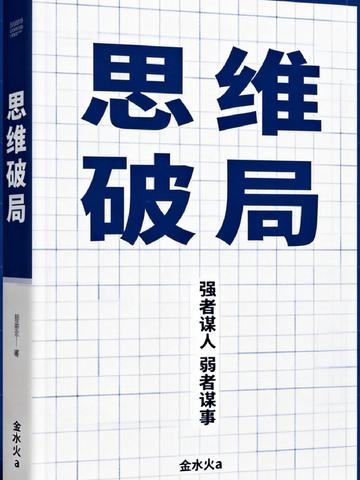
This book is for every ordinary person who has struggled with the realities of life.
We live in an age of constant comparison. Open your social media, and you'll see other people getting promoted and earning more, traveling the world, and succeeding in business. Put your phone down, and you're still worrying about your mortgage, anxious about work, and uncertain about the future. We often ask ourselves: Why can other people make things happen, while I can't? Why do they live with such ease, while I'm so exhausted?
The answer may be simple: it's not that you aren't working hard enough. It's that you're using the wrong way of thinking.
This book divides people's thinking into two types: the mindset of the strong and the mindset of the weak. The strong focus on people; the weak focus on tasks. The strong look within for answers; the weak look outside themselves. The strong stay focused on what needs to be done; the weak get caught up in their emotions. The strong repay kindness; the weak take credit and shift blame. Across twenty chapters, each centered on one key mindset, the book explains the underlying logic behind the difference between the strong and the weak.
The book follows Liu Bei's path as an entrepreneur.
He was chosen because he's the most like an ordinary person. He raised an army at twenty-four and came from humble beginnings, selling straw sandals and woven mats. He had no money, power, or connections. Over more than thirty years, he lost countless times: he lost Xuzhou, lost his wife and children, was hounded by Cao Cao, and spent seven years dependent on others in Jingzhou. But he got back up every time, and at sixty he became emperor in Chengdu, claiming one-third of the realm.
He wasn't a genius. He was no match for Cao Cao in battle, for Zhuge Liang in strategy, or for Sun Quan in family pedigree. But he had a particular gift: he always knew what he wanted, was always studying people, and never gave up. These are the qualities ordinary people can learn from most.
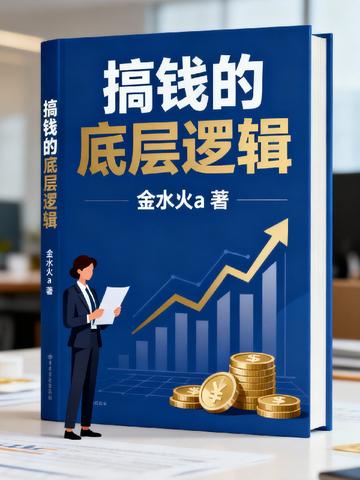 The Fundamentals of Making Money
 Jin Shui Huo A's 16th Book
 The Existence That Proves Existence
 Reflections on Cultivation
 Understanding the Mind and Nature
 Straight to the Essence
 Starting with 100 Yuan: The Real Rules of Making Money
 The Journey to Enlightenment: Awakening to Live Wisely as an Adult