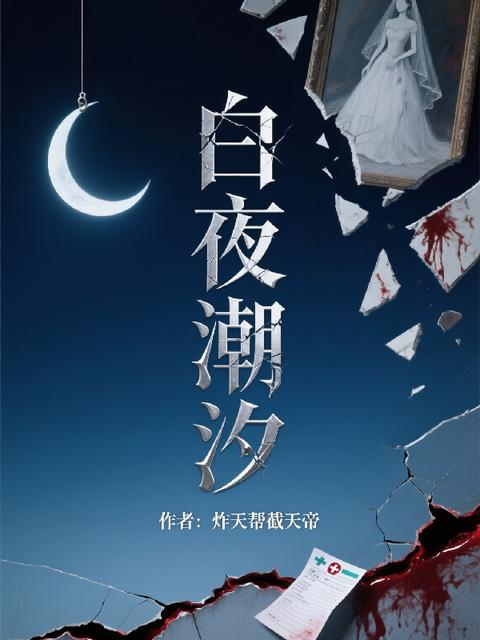
“I married him to nail him to a pillar of shame.
But he used the little life he had left to rehearse a silent funeral for me.”
Everyone in Jiangcheng knew that Jiang Yue, the queen of business, had married the down-and-out painter Lin Ye. It was a marriage of convenience driven entirely by revenge.
For three years after the wedding, she broke his paintbrushes, took away his freedom, and imprisoned him in a cage called marriage, watching as he grew paler and withered away. She mocked the scars on his hands from shielding her from sulfuric acid, calling them a shameless act, and taunted him for always keeping another woman, his unattainable first love, in his heart.
Lin Ye never defended himself. He only stroked the scar on his ring finger late at night. After his paints were taken away, he silently smashed up the studio. In the end, he calmly asked, “Let’s get divorced. I’m sorry for imposing on you these past three years.”
It wasn’t until Jiang Yue picked up a torn wedding-dress sketch amid the wreckage that she saw her own name on the back.
Inside a rusty cookie tin, a yellowed medical record lay in plain sight:
Chronic myeloid leukemia, accelerated phase. Diagnosed one month before their wedding.
The doctor’s prognosis was cold: at most three years.
The three-year mark was almost here.
At last, she understood. He had never sacrificed his dignity. He had sacrificed what little life he had left. The pallor, bruises, silence, and “avoidance” she had once sneered at were all the opening scenes of death’s slow approach.
And without realizing it, she had used her hatred as a blade, adding the most painful and thunderous final note to the quiet ending he should have had.
“Jiang Yue, I really did lie to you.”
At the very bottom of the medical record, he had added a crooked line of tiny writing before he died:
“I loved you too.”