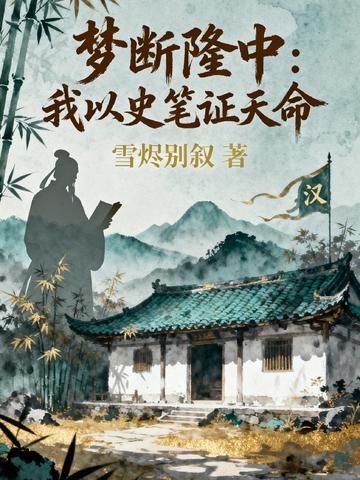
One morning in the sixth year of Jian'an, I fell from my desk in the twenty-first century into the flames of war at the end of the Han dynasty. I became an adviser in Shu Han who knew how events would end. From the flight through Xuzhou to the entrusting of the orphan at Baidi, from the Longzhong Conversation to the falling star at Wuzhangyuan, I plotted with modern knowledge, yet watched history roll over every struggle like an iron track.
I helped improve the Shu brocade trade, proposed upgrades to the repeating crossbow, and promoted the tuntian system in Hanzhong. In the end, these would all become achievements credited to Chancellor Zhuge in the history books. I foresaw Guan Yu's defeat, the death of the former lord, and the loss at Jieting, yet I could only keep silent when the time was right, becoming an anonymous footnote behind those "heaven-sent brilliant stratagems."
Over forty years, I went from a passionate reformer to a weathered chronicler. When the surrender banners were finally raised over Chengdu's gates, I clutched the bamboo slips recording the rise and fall of Ji Han and finally understood: the meaning of transmigrating was never to turn the tide of fate. It was to witness, with my own flesh and blood, what it meant to "do what must be done, even knowing it cannot be done," through late-night games of chess with Kongming and snowstorms spent gazing toward Qishan with Jiang Wei.
Today, when I awoke before a glass museum case and saw the familiar handwriting on The Final Chronicle of Ji Han, I finally understood: I had never changed history. History had chosen me, and at the cost of a lifetime of wandering, I became the final witness to that lamp of benevolence and righteousness, which kept burning through the chaos for forty-three years.