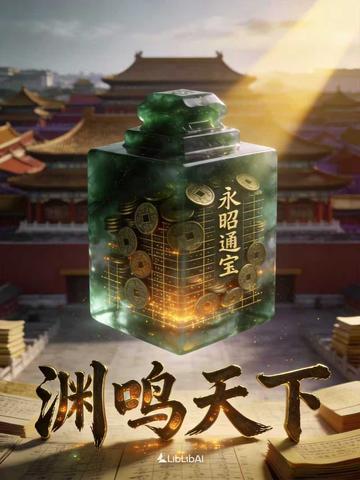
He studied how the Ming dynasty fell, only to transmigrate into a time when it still stands: the Yongzhao Golden Age, with annual revenues of 28 million taels and 12 million taels of silver in the imperial treasury.
But when he wakes in the Ministry of Justice's prison, he sees none of that. All he sees are tally marks carved into the wall by those who came before him, and a piece of charcoal in his hand that can draw lines.
The female clerk should never have given him a second glance. Until he uses that charcoal to draw several columns of varying heights on the wall. So accounts can be understood at a glance. So the shortfalls everyone has always accepted can be calculated without mercy.
Fictitious ghost posts, the charcoal depot, an entire chain of exploitation. The deeper they dig, the more they discover the same sickness hidden in the cracks of this golden age: his father kept it alive, but never taught it how to keep growing.
His task is not to protect this rewritten world, but to push it toward a future his father never reached. Get silver moving again, break the coastal monopolies, and let the study of science take the place of stale exam essays. Make sure this Ming dynasty does not repeat the fate of its fallen counterpart in some unseen corner of history.
But every step forward means getting his hands dirty. Compromise, house arrest, personally driving people toward the abyss. He thought his “history mistake notebook” would help him avoid every trap. In the end, he learns that mistakes will always happen, but what matters is that there is still a chance to set things right.
When the steam engine finally begins to smoke, and the boy who called him “Master” becomes lord of the seas, the talisman suddenly grows hot, summoning him back to the modern world.
Stay, or leave?
She says only, “Wherever you go, the ledger goes too.”
And their three-year-old daughter is clutching his finger, learning to draw her first column.
In one lifetime, he will bore through the iron house and teach this golden age how to grow.