History is a blade, and memory its scabbard. Yet what lies hidden in the scabbard is the enemy’s edge.
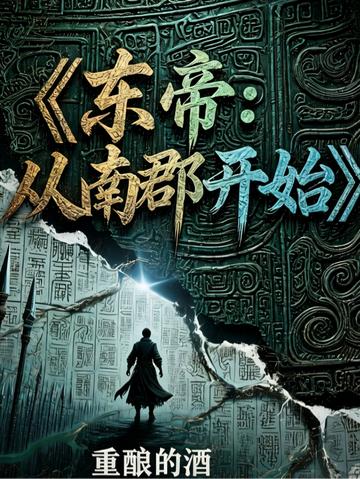
In 350 BC, Tian Pijiang is born in the royal palace of Qi. He is the son of King Wei and the future King Xuan of Qi, born to noble blood and heir to the flourishing city of Linzi. No one knows that another soul has awakened in this body: one from two thousand years in the future, carrying the chilling memories of Heifu, a low-ranking Qin official from Nanjun.
It is no blessing, but a curse. The grooves carved by bamboo slips and statutes, the acrid stench of smoke on the battlefield, the struggle and terror of ants under Qin’s brutal laws. He knows exactly how the war machine that will soon crush the Six States operates, and he was once one of its insignificant cogs.
And so the most absurd predicament descends upon the Warring States: one soul, half a prince of Qi and half a Qin official. No one knows the enemy more deeply, nor suffers more keenly.
He watches his father and ministers celebrate a great victory at Maling, yet hears the war drums of Qin in his heart. He listens to the scholars of Jixia Academy expound on “benevolent rule” and “the way of kings,” while deep in his bones he trembles at the echo of Qin’s laws: “The laws must be uniform; rewards and punishments must be clear.” As Qin hones Nanjun into a steel spike aimed at the eastern states and sends forth its poisonous scheme to attack Chu by way of Qi, the officials crowding the court either covet immediate gains or fail to see the long-term danger.
Only he, Tian Pijiang, is torn apart by two sets of memories beneath the lamplight of the Orchid Terrace in the inner palace. He fears the machine he once served, but fears even more that his homeland of Qi will become dust beneath its iron hooves. With the enemy’s sword, I will defend my country. With my own blood, I will fight against my own soul.