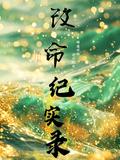
Records of the Passing Years is a historical diary composed of year-by-year accounts and personal reflections, written by the Qing-dynasty Shanghai man of letters Yao Tinglin. It records social events and the author's personal life over more than 70 years, from the first year of the Chongzhen reign of the Ming (1628) to the 36th year of the Kangxi reign of the Qing (1697). It is an important source for understanding the Ming-Qing transition and changes in local society. Yao Tinglin worked as a county clerk in his youth, then farmed and taught. He had a deep understanding of the hardships of ordinary people and used his own life as the main thread of his account, recording a period of Chinese history marked by both great events and everyday life among the people.
Records of the Passing Years recounts events year by year in an unconstrained style. It records the climate, famine, warfare, and harsh rule by local officials, as well as the real hardships people suffered from food shortages, storms, floods, and other disasters. For example, it describes how a powerful storm in the Shanghai area in the 35th year of the Kangxi reign caused flooding, killing and injuring many people and destroying homes. This reveals the vulnerability and helplessness of society at the grassroots level. Yao Tinglin records major social events as well as the small matters of ordinary people, such as officials' harsh grain levies and the hardships faced by farming households. The book is a firsthand source on the lives of people at the bottom of society and relations between officials and the people.
The prose is plain and natural, with a flowing, detailed narrative that follows the principle of "recording events when there are any and saying little when there are none." It conveys the author's direct impressions of history and reality. Written by someone who lived through the events it recounts, this long-span chronological work fills gaps in orthodox histories, which often overlook ordinary people's lives and local social conditions. It also offers a valuable perspective for studying social structures, grassroots governance, and weather disasters during the Ming-Qing transition. It is a rare example of an unfiltered chronicle in China's traditional historical record.