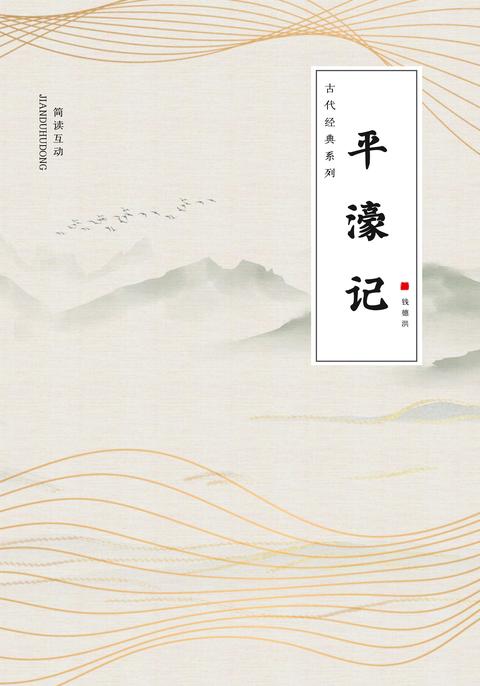
The Account of the Pacification of Hao is a one-volume historical work and collection of notes written by Ming scholar Qian Dehong. It is an important source on the suppression of the rebellion of Zhu Chenhao, Prince of Ning, in 1519 during the Jiajing reign. Qian Dehong was not a famous literary master known for historical miscellanies; rather, his records of historical events appear in collections such as the Classified Compilation from the Sea of Learning. This work is classified by historians as a chronological account that briefly describes the course of the rebellion and the actions of those involved. It is not an official history, but it systematically recounts the outbreak and spread of the Prince of Ning's rebellion and its eventual suppression by the court, drawing on firsthand or near-primary sources. It is a valuable supplement for later studies of political and military crises during the Jiajing reign.
The book centers on the reasons Zhu Chenhao took up arms, his advance toward the capital, and the changing course of the conflict. It depicts the shifting contest among the rebels, the court's armies, and local forces. The Account of the Pacification of Hao closely portrays the strategic choices, military plans and deployments, and actions of key figures during the turmoil. Compared with official histories, it pays greater attention to the course and details of the fighting. At times, it quotes memorials, excerpts from contemporary records, or eyewitness accounts, bringing readers closer to the events as they unfolded.
Though brief, The Account of the Pacification of Hao is highly valuable as a historical source thanks to its focused subject and concise narrative. It is a rare resource for understanding the political crisis of the mid-Jiajing period and conflicts with local forces. It is an important reference for studying Zhu Chenhao's rebellion, the interplay of military and political affairs, and the Ming central government's response to local uprisings. For history enthusiasts, it is both a vivid record of conflict as it happened and a window onto Ming society and political life.