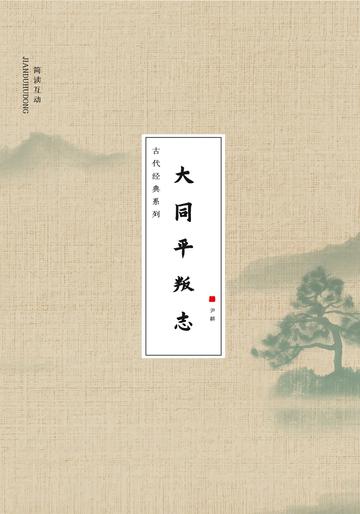
The Chronicle of the Pacification of the Datong Rebellion is a historical and literary work from the Ming dynasty, written by Yin Geng. Composed during the Ming era, it records in a documentary style the rebellions that broke out in the Datong region and the efforts to suppress them. It is an important historical source for studying unrest in the Ming frontier, military policy, and local governance. With “pacifying the rebellion” at the heart of its narrative, the work details how several factors, including lax border defenses, ineffective beacon towers, and poor military discipline, led to an uprising in Datong. It traces the events step by step, from the arrangements and strategies of the governor and commanding generals to the shifting circumstances of the rebel leaders and the course of the mutiny, revealing the complex realities of Ming military organization, popular customs, and wartime administration. Though its language is plain, it provides a firsthand record of the struggles and choices made by Ming soldiers and civilians amid domestic turmoil and foreign threats.
The historical record contains few details of Yin Geng's life, but his authorship of this work reflects Ming scholars' concern for events on the frontier and their rigorous approach to organizing historical sources. The Chronicle of the Pacification of the Datong Rebellion portrays the many social forces at play, including government troops besieging the city and coming to its relief, divisions among the rebels, adjustments to the strategies of defending commanders, and the intervention of surrounding ethnic groups. It features tense battle scenes as well as perceptive portrayals of leaders' strategies and troop morale, making it a military chronicle that combines historical fact with literary merit.
The work was later compiled as a public-domain historical text, offering modern readers a firsthand source for understanding the political and military upheavals in the Datong region during the Ming dynasty. It is not only an important source for studying Ming frontier governance, social unrest, and relations between soldiers and civilians, but also demonstrates the expressive power of traditional Chinese documentary writing on military subjects. It offers a valuable historical perspective on the northern frontier situation in the sixteenth century.