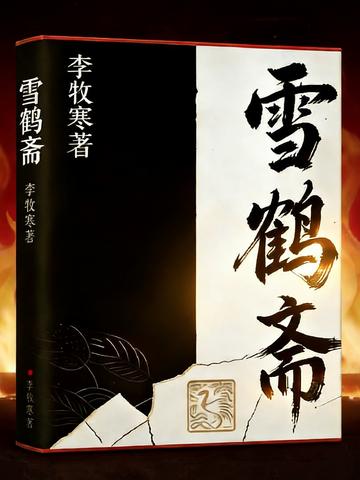
The cruelest poison is making the broken still long to be whole.
In the winter of the eighth year of the Tongzhi era, Chen Zhou’s wife squeezes out the last of her milk, now a pale blue, and feeds it to a debt that has ballooned from 470 taels to 3.12 million dollars. From the execution cages of the Imperial Kiln to the digital courtroom, five generations’ lives have become interest on that debt. The blue line on your gums, the pale blue blood you cough up, the traumatic memories hidden in your NFT wallet: they are all different versions of the same debt.
In the hardest year, thirteen-year-old Chen Yanzhi counts raindrops in an execution cage. He counts out a breathing pattern of three short breaths and one long one, his only painkiller. In the maddest year, Li Muhan coughs up blood as he turns his family’s trauma into a blockchain asset, all to leave his daughter, Li Nianhe, a “clean inheritance.” At last, the lake guardian A Guo smashes a pottery jar and discovers that the 166-year debt was no more than a breath that nearly stopped in someone’s lungs.
Some debts are owed from the moment you’re born. Some lives must be pieced back together, even after they shatter.
Kilns will die out, porcelain will break, and people will die.
But that breath still sends ripples across the surface of the Chang River: the courage to want wholeness in a broken world.