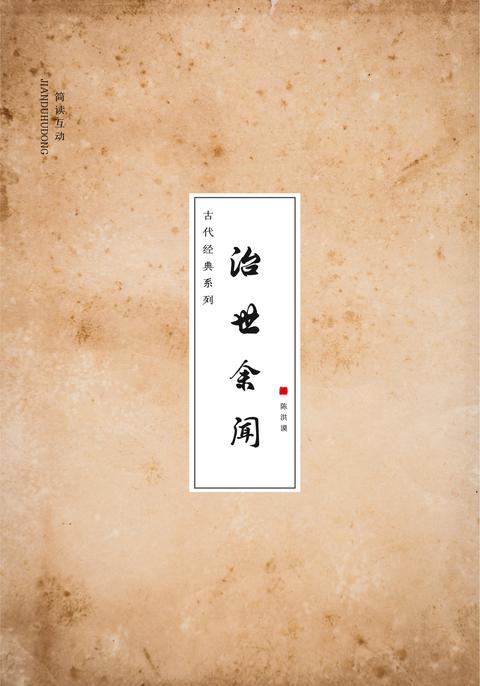
Miscellaneous Records of a Well-Governed Age is an important Ming-dynasty work of historical notes, written by Chen Hongmo during the Hongzhi reign of Emperor Xiaozong (1488-1505). In eight volumes, divided into four volumes for the first part and four for the second, it is a representative historical source among traditional Chinese chronicle-style miscellanies. In the form of assorted entries arranged by year, it records court affairs, the emperor's words and deeds, officials' memorials, social observations, and the customs of the Hongzhi reign. It is an important primary source for studying Ming political culture and the realities of officialdom. Since the author carefully compiled what he had personally seen and heard, the work offers both historical value and engaging prose.
In the title, "a well-governed age" refers to a time of clear governance and social stability, while "miscellaneous records" indicates notes on government affairs the author heard about or witnessed during that era. The first part mainly recounts major court affairs during Emperor Xiaozong's reign, the emperor's governing principles, and the business of civil and military officials. The second part focuses on officials' words and deeds, anecdotes from officialdom, and stories from among the people. It includes commentary on officials and assessments of memorials, allowing readers to observe the political and social climate of the time through these miscellaneous records.
Since Chen Hongmo had passed the imperial examinations and served at court, his notes do more than record historical facts: they also convey his impressions of people's characters and the political climate. They provide later researchers with a firsthand reference for studying Ming political culture, the workings of officialdom, and the relationship between imperial power and the literati. Miscellaneous Records of a Well-Governed Age is often paired with another work by the same author, Records of the Successive Reigns, which recounts observations from a different period. Together, they are important historical sources among China's traditional chronicle-style miscellanies.