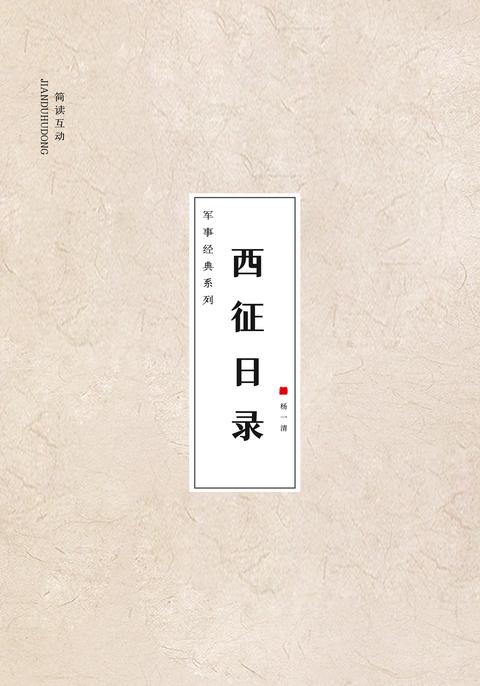
The Western Campaign Journal is a valuable historical source in the form of a military diary, written by the Ming politician and military strategist Yang Yiqing. It records his firsthand observations and strategic reflections throughout the campaign he led against Ningxia at the imperial court's command, putting down the rebellion of Zhu Zhi'an, Prince of Anhua. Its account ranges from receiving his orders and setting out, to the route of the march, military and administrative arrangements, and the measures taken after the campaign. Yang Yiqing, courtesy name Yingning and art name Suian, was a renowned Ming frontier commander and official who served as Governor of Shaanxi and Viceroy of Shaanxi and Gansu. A learned man well versed in frontier affairs, he brought both political and military experience to the work, making the journal a firsthand source for understanding Ming frontier strategy, military operations, and political governance.
The book is written as a diary, recording events day by day from the moment Yang Yiqing received his orders to depart. It details the army's route, dangers encountered along the way, troop movements, interactions with colleagues, the responses of local soldiers and civilians, and postwar arrangements to reassure the people of Ningxia and other areas and manage relations between the military and civilians. It is a rare, authentic account of military affairs from the front lines. The author does not merely describe the fighting itself: he also reflects on political judgment, the enforcement of military discipline, post-campaign relief, and legal proceedings, revealing the practical work and sense of responsibility of officials viewed through both military and administrative lenses.
The Western Campaign Journal is of immense value to historical research. It fills gaps in official histories concerning the details of military campaigns and dealings between individuals, and gives later scholars concrete, detailed textual evidence for studying Ming military and administrative systems, frontier governance, relations between soldiers and civilians, and the mechanisms used to suppress rebellions in the early Ming. For readers interested in ancient Chinese military history, Ming political culture, and documentary historical writing, this work is an exceptionally valuable source.