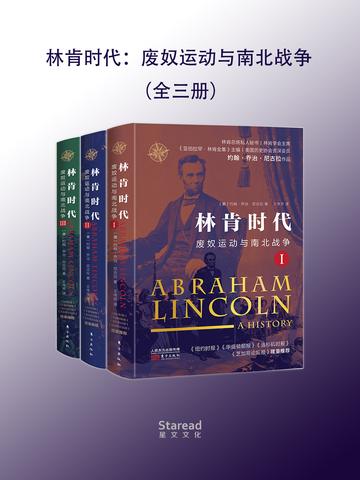
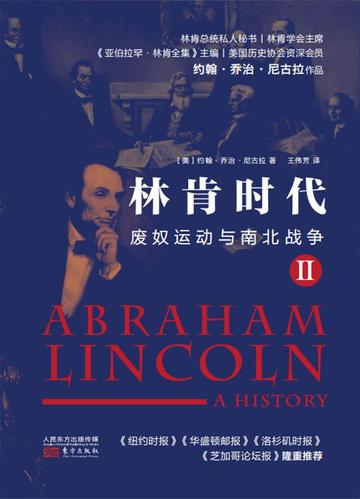
"The Age of Lincoln: Abolition and the Civil War" consists of three volumes and is the representative work of John George Nicholas, President Lincoln's personal secretary. It profoundly interprets the causal relationship between the institutional design of the founding of the United States and the formation of the North-South secession crisis, comprehensively analyzes the realistic logic of the rise of the abolitionist movement and the intensification of conflicts between the North and the South, and tells a multi-layered story about the outbreak, process, and end of the Civil War. This book is recognized by European and American circles as an important document for studying President Lincoln.
Reader comments
A vivid account of the history of the American Civil War and the abolitionist movement. The book not only contains battle details and political games, but also depicts Lincoln's choices and perseverance. The content is solid and easy to understand. It is a high-quality book for understanding this period of history.
Not only does Lincoln appear in the book, but there are also the struggles of countless abolitionists, ordinary soldiers, and black slaves. They may be small, but they use their shouts and actions time and time again to gather force to promote change. This also tells us that every ordinary person who adheres to justice may become a torrent that changes history.
The passion for abolition burned in the north and south, and little people wrote the epic of freedom.
Recently, I have really learned about international history, especially the development process of the United States. When I read this book, I really figured out many things that I didn't understand before. The introduction is very detailed.
As a rare domestic monograph focusing on Lincoln and the Civil War, it fills the reading gap in related fields and is worth collecting.
It is a very good book that focuses on the core context of abolition and the Civil War. It not only restores Lincoln's vision and perseverance, but also depicts the ups and downs of the fate of the people at the bottom in the torrent of the times. The plot is full of empathy.
Although everyone knows very little about President Lincoln, his deeds and spirit are obvious to all. The people can see what kind of person he is.
After reading it, I realized that the roots of racial problems in the United States had long been laid during the Civil War. This book gave me a new perspective on thinking.
The book is beautifully bound and equipped with war maps and historical photos. When reading, you can intuitively feel the battlefield pattern and era style of the Civil War.
After reading this, I have a deeper understanding of "freedom" and "equality". The struggle in the Lincoln era still has practical significance worthy of our consideration.
The image of Lincoln as a "moderate abolitionist" was established. His hesitation, determination and compassion were vividly displayed on the page, and he was no longer a cold statue in the textbook.
The book describes the debate between Lincoln and Douglas very wonderfully, and you can feel the collision of the two ideas, as well as Lincoln's wisdom and pattern, between the lines.
From the struggles of abolitionist pioneers to the battlefield experiences of ordinary soldiers, micro narratives and macro history are perfectly combined to show the multifaceted nature of war.
The historical materials are rigorously researched, citing a large number of Lincoln's letters, original speeches, and the memoirs of his contemporaries, giving it a sense of reality.
I originally thought it was a boring history book, but I didn't expect it to be as exciting as a story. The ups and downs of the fate of historical figures make people want to read it.
The length is moderate, neither a collection of fragmented short articles nor lengthy elaborations, taking into account both depth and readability.
The interpretation of the key battles of the Civil War is very good. It not only talks about tactical deployment, but also analyzes the strategic intentions behind it. Military fans can also find resonance.
Taking Lincoln's political career as the main line, it connects the germination and fermentation of the abolition movement and the entire process of the Civil War, and explains the deep logic of the American Civil War thoroughly.
The notes and appendices in the book are very considerate, supplementing background knowledge and further reading suggestions to facilitate readers' in-depth study.
The descriptions in the book are very profound, as if facing the battlefield directly, which directly touches people's hearts.
The book's profound analysis of the background of the Emancipation Proclamation made me understand that this document was not only a moral victory, but also a subtle political and military game.
The translator has solid skills, and the translation is smooth and natural, retaining the historical weight of the original text without any stiff translation accent.
As a teacher, this book is an introductory book on American history that I recommend to my students. It is vivid and easy to read, and it can also trigger in-depth thinking.
I read most of the book in one go. Lincoln's personality charm is so attractive. The cruelty of war and the difficulty of abolition make people feel sore.
The structure is clear, and the chapters are divided according to the timeline. It is written from the rise of the abolition movement to the end of the war. The context is clear at a glance and will not be confusing.
It details Lincoln's pressure and struggle during the war, the pain of losing his son, the defeat in the battle, and the doubts of public opinion, allowing readers to see the fragile side of the great man.
Every time you reread it, you can discover new details, such as Lincoln's humor and self-deprecation. These small details make the image of the great man more vivid.
The language is easy to understand and is not filled with obscure academic terms. Even history novices can easily read it.
I couldn't calm down for a long time after closing the book. A war changed the destiny of a country. A president spent his whole life practicing his beliefs and has great stamina.
Breaking out of the limitations of "biography of a great man", it not only writes about Lincoln's vision and sagacity, but also does not avoid his compromises and trade-offs on the issue of abolition. The historical perspective is objective and three-dimensional.





A vivid account of the history of the American Civil War and the abolitionist movement. The book not only contains battle details and political games, but also depicts Lincoln's choices and perseverance. The content is solid and easy to understand. It is a high-quality book for understanding this period of history.
Not only does Lincoln appear in the book, but there are also the struggles of countless abolitionists, ordinary soldiers, and black slaves. They may be small, but they use their shouts and actions time and time again to gather force to promote change. This also tells us that every ordinary person who adheres to justice may become a torrent that changes history.
The passion for abolition burned in the north and south, and little people wrote the epic of freedom.
Recently, I have really learned about international history, especially the development process of the United States. When I read this book, I really figured out many things that I didn't understand before. The introduction is very detailed.
As a rare domestic monograph focusing on Lincoln and the Civil War, it fills the reading gap in related fields and is worth collecting.
It is a very good book that focuses on the core context of abolition and the Civil War. It not only restores Lincoln's vision and perseverance, but also depicts the ups and downs of the fate of the people at the bottom in the torrent of the times. The plot is full of empathy.
Although everyone knows very little about President Lincoln, his deeds and spirit are obvious to all. The people can see what kind of person he is.
After reading it, I realized that the roots of racial problems in the United States had long been laid during the Civil War. This book gave me a new perspective on thinking.
The book is beautifully bound and equipped with war maps and historical photos. When reading, you can intuitively feel the battlefield pattern and era style of the Civil War.
After reading this, I have a deeper understanding of "freedom" and "equality". The struggle in the Lincoln era still has practical significance worthy of our consideration.
The image of Lincoln as a "moderate abolitionist" was established. His hesitation, determination and compassion were vividly displayed on the page, and he was no longer a cold statue in the textbook.
The book describes the debate between Lincoln and Douglas very wonderfully, and you can feel the collision of the two ideas, as well as Lincoln's wisdom and pattern, between the lines.
From the struggles of abolitionist pioneers to the battlefield experiences of ordinary soldiers, micro narratives and macro history are perfectly combined to show the multifaceted nature of war.
The historical materials are rigorously researched, citing a large number of Lincoln's letters, original speeches, and the memoirs of his contemporaries, giving it a sense of reality.
I originally thought it was a boring history book, but I didn't expect it to be as exciting as a story. The ups and downs of the fate of historical figures make people want to read it.
The length is moderate, neither a collection of fragmented short articles nor lengthy elaborations, taking into account both depth and readability.
The interpretation of the key battles of the Civil War is very good. It not only talks about tactical deployment, but also analyzes the strategic intentions behind it. Military fans can also find resonance.
Taking Lincoln's political career as the main line, it connects the germination and fermentation of the abolition movement and the entire process of the Civil War, and explains the deep logic of the American Civil War thoroughly.
The notes and appendices in the book are very considerate, supplementing background knowledge and further reading suggestions to facilitate readers' in-depth study.
The descriptions in the book are very profound, as if facing the battlefield directly, which directly touches people's hearts.
The book's profound analysis of the background of the Emancipation Proclamation made me understand that this document was not only a moral victory, but also a subtle political and military game.
The translator has solid skills, and the translation is smooth and natural, retaining the historical weight of the original text without any stiff translation accent.
As a teacher, this book is an introductory book on American history that I recommend to my students. It is vivid and easy to read, and it can also trigger in-depth thinking.
I read most of the book in one go. Lincoln's personality charm is so attractive. The cruelty of war and the difficulty of abolition make people feel sore.
The structure is clear, and the chapters are divided according to the timeline. It is written from the rise of the abolition movement to the end of the war. The context is clear at a glance and will not be confusing.
It details Lincoln's pressure and struggle during the war, the pain of losing his son, the defeat in the battle, and the doubts of public opinion, allowing readers to see the fragile side of the great man.
Every time you reread it, you can discover new details, such as Lincoln's humor and self-deprecation. These small details make the image of the great man more vivid.
The language is easy to understand and is not filled with obscure academic terms. Even history novices can easily read it.
I couldn't calm down for a long time after closing the book. A war changed the destiny of a country. A president spent his whole life practicing his beliefs and has great stamina.
Breaking out of the limitations of "biography of a great man", it not only writes about Lincoln's vision and sagacity, but also does not avoid his compromises and trade-offs on the issue of abolition. The historical perspective is objective and three-dimensional.