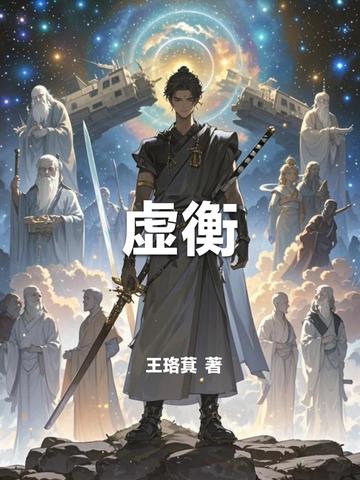
As the boundaries of the universe unfold in our imagination and the fate of civilizations intertwines with the mysteries of existence, we are always searching for a lens through which to see our place in the vastness. Void Balance is just such a lens. Built on the foundations of science fiction and animated by philosophy, it turns the movements of stars and the rise and fall of civilizations into thought experiments that probe the ultimate questions.
In the story, the “divine creation” dilemma of the Cultivators' Association deconstructs traditional faith; the dual consciousness of the Taiji species blends Eastern and Western philosophies; the artistic transcendence of Sosalis redefines the essence of faith; and the transformation of chaos upends the binary opposition between good and evil. Beneath these fantastical ideas lies a modern response to questions that have occupied us for millennia: “Why is there something rather than nothing?” “How can meaning endure within the finite?” “How can diverse civilizations coexist?” Rather than locking philosophy away on a high shelf, the novel makes abstract questions tangible through clashes between civilizations and the resonance of consciousness.
This is not merely a science-fiction narrative, but an intellectual journey across physics, theology, ethics, and epistemology. From the way a system of plural laws transcends scientific reductionism to the way relational ontology reconstructs “existence”; from freedom and responsibility on a cosmic scale to the real-world metaphor of humanity's “quasi-mature” moment, the work continually builds bridges between the vast and the minute, letting us gaze at ultimate questions in the depths of nebulae while also seeing the philosophical foundations of our own lives.
The Taiji species' journey from observer to Taiyi is a metaphor for the awakening of human consciousness: moving from an isolated self, to understanding others, and finally to merging with all things.