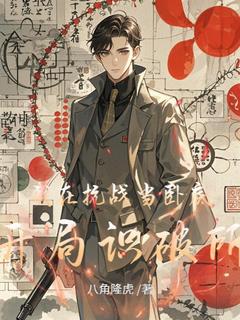
Gu Huaian, a military foreign-language student, dies suddenly and transmigrates to an anti-Japanese protest in 1937. From the start, the Kuomintang throws him in jail.
In prison, he “predicts” the Marco Polo Bridge Incident. The Military Statistics Bureau sees him as a treasure and sends him to a special training camp. While others practice shooting, he practices talking. His Japanese is even more fluent than the Japanese officers', and upon graduation, he is sent straight to Shanghai.
The Military Statistics Bureau cuts his funds? His life is tough, so he turns around and becomes the chief interpreter for a collaborationist merchants' association, speaking Japanese like a native. On the surface, he helps the Japanese cheat Chinese merchants. In secret, he sells the same intelligence three times over: to the Military Statistics Bureau, the underground Communist Party, and even the American OSS, who come to buy “Japanese military secrets.”
The collaborationist association's chairman sells out his countrymen? Gu turns the tables and uses the Japanese to eliminate him. Japanese agents admire his knack for making money? He seizes the chance to infiltrate the Plum Agency, takes the Japanese name Morikawa An, and becomes a double agent among double agents.
Before the attack on Pearl Harbor, he “analyzes” a weakness in the American defenses. When the Japanese transport gold, he intercepts 200 kilograms along the way. One by one, he sends the people on the war-criminal list to hell.
On the night Japan surrenders, he burns all the files and donates the remaining gold to the underground Communist Party, keeping one box of U.S. dollars for himself. The next day, news spreads across Shanghai: “Japanese spy Morikawa An was executed by anti-Japanese guerrillas.”
Meanwhile, at a Hong Kong dock, a man wearing sunglasses boards an ocean liner. His luggage holds enough wealth to last him three lifetimes.