It always rained in Zhongshan during the summer.
This was not the kind of fine rain common in Sichuan, gentle and lingering, falling in thread after thread all day long. The rain here was fierce, crashing down in sheets. Large drops pelted the concrete, the tin roofs, and the windows of the hospital rooms, making a sharp, irritating racket. The rainwater gathered into muddy streams, rushing along the walls and through the gutters toward lower ground beneath the faint glow of the streetlights. It carried away dust and fallen leaves, as well as the last traces of heat that had clung to the day, leaving only a damp, clammy chill. The air felt so saturated with moisture you could wring it out. Breathing it in felt heavy, carrying the earthy stink of soil and the faint, persistent aftertaste of disinfectant. The rain was the only star of this sweltering summer night, monotonous and relentless, washing over this place trapped in a mountain hollow again and again, as if trying to erase something, or perhaps to drive something away without ever tiring.
And yet, lights always shone through the endless curtain of rain. They came from windows set into clusters of gray buildings, warm yellow squares, one after another. Some were in the outpatient and emergency building, where the cold, steady light of fluorescent tubes illuminated the corridors, examination rooms, and the figures who never stopped working in front of the lab benches. Others were in the hospital wards, their light softer, reflecting the green lines pulsing across the monitors and the indistinct figures who occasionally rose to check on patients. Still others were in the staff dormitories in the distance, scattered and weary, but stubbornly lit all the same, long into the night.
The very fact that these lights were there was a kind of steadfastness. It had nothing to do with poetry or romance.
Steadfastness itself
is the meaning.
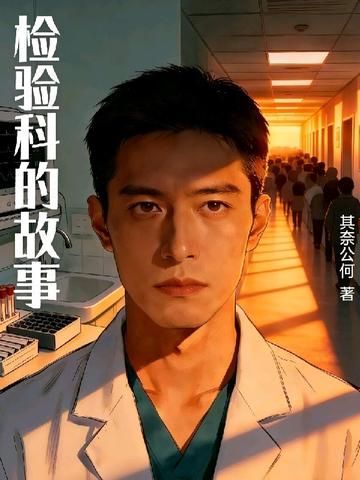




1. De-deification: Restore the "imperfection" and "human" weight of medicine 2. Micro narrative: salvaging the humanistic background of medicine in individual destiny 3. Structural tension: questioning the original intention in the rhythm of "fast" and "slow" 4. Modern medical fables about "persistence" I really feel like I'm a bit shameless and bragging about myself (laughs) No matter who you are, as long as you think this book is good Please support me! (Bow)
The details are well described.
The author's writing style is delicate, and his perspective may seem simple and plain, but in fact, he speaks eloquently and expresses the author's professional ideals! The novel contains a lot of "medical" content, so few people read it, but it is really realistic and beautiful to read. Chapter 8 They are a group of ordinary people who will secretly smoke and complain in violation of hospital regulations during work breaks; when the patient's test results show abnormality, the doctors in the laboratory department race against time. Feeling the kindness of the doctors, it makes people's eyes wet.