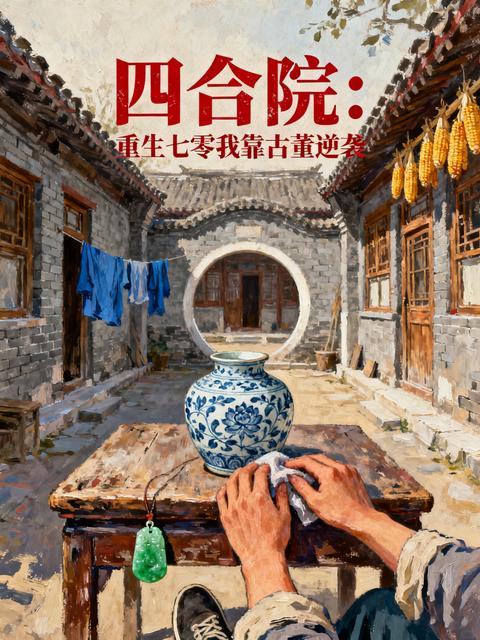
In a Beijing hutong in 1975, the bitter wind swept coal smoke into the south room of Courtyard No. 95. Chen Yan, a museum restoration expert, opened his eyes to find himself reborn as an orphan who had just returned to the city, with 280 yuan in life-saving compensation money tucked against his chest. Up front, Jia Zhangshi stood blocking the door and demanding “support money”; behind him, Second Master Liu Haizhong eyed him with accusations of “speculation and profiteering.” Third Master Yan Bugui's abacus clicked away, and even Silly Zhu, the most loyal man in the courtyard, thought he had no future because he “picked through junk.”
But nobody expected this young man, with the expertise in antique appraisal he'd acquired over two lifetimes, to find a Qing-dynasty bamboo carving for just 30 yuan at a temple fair and sell it at Liulichang for half a year's wages. In the early days of reform and opening up, he made a move on Panjiayuan, using legitimate business practices to thwart Xu Damao's baseless report. He opened an antique shop, renovated dangerous buildings, and took on state-level restoration projects, leading Silly Zhu, Qin Huairu, and the other longtime neighbors from the hard days when food ration coupons never went far to becoming a model of Beijing's antique trade.
No mindless feuding, just a clear head and professional know-how to solve problems; no golden finger falling from the sky, just a practical man who knows how to seize the opportunities of the times. See how Chen Yan settles the debts of human feeling in the courtyard and distinguishes the genuine from the fake in the antique business, turning the neighbors' chaotic daily life into a free and happy existence full of old Beijing charm and the satisfaction of a comeback. After all, good days aren't won by arguing, they're earned through ability!


 At Forty, I Have It All Figured Out: My Spirited Girlfriend
 The Immortal Path Guide to Spending Money