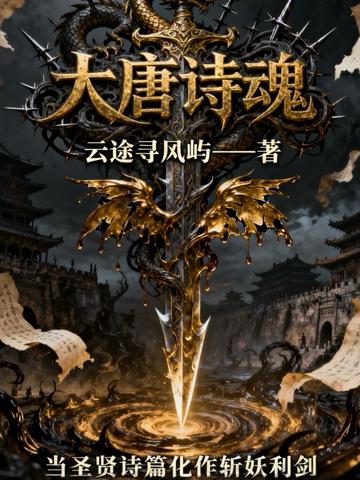
[Fantasy + genius + defending the Way + literary heritage + inheritance + conflict] In 676 CE, Wang Bo wrote, “The rosy clouds fly alongside the solitary wild goose,” dazzling the world before drowning in the South China Sea at the age of twenty-seven.
The world believed the genius was gone, never knowing that his overflowing talent and lingering regrets had congealed into a wisp of poetic soul. For a century, it wandered in a daze through the Tang dynasty, its memories sealed away. Only the most sublime beauty and deepest emotions in the world could briefly awaken its consciousness.
A century later, in the late Tang. After failing the imperial examinations ten times, Luo Yin wanders through Tengwang Pavilion, disheartened. In the ancient water stains on the wall, he sees fragments of flowing verse that no one else can see.
That night, a figure in blue robes appears in his dream, reciting, “Though oceans apart, we remain friends,” with all the brilliance of ages past.
One is a lonely poet spirit trapped in time; the other, a down-and-out scholar from a humble family. Kindred spirits separated by a century finally meet:
Wang Bo uses his poetic soul to pass on the spirit of the early Tang, while Luo Yin anchors him to the human world and helps him recover his memories.
But the closer they get to the truth, the more alarming it becomes. Wang Bo’s spirit did not remain in the human world by chance. The Preface to Tengwang Pavilion is the key to protecting the literary heritage, and his poetic soul is the last line of defense against literary calamity, safeguarding civilization from annihilation!
As the literary heritage of the dying Tang dynasty teeters on the brink of collapse, two disillusioned geniuses take up their brushes as swords and their souls as flames:
Luo Yin must make his name beyond the examination halls, but more than that, they must preserve the last undying spark of poetic soul for all mankind!
Witness a poetic soul from a century past meet his kindred spirit in this life, and write a legend of “defending the Way through poetry” amid the storms of the late Tang!