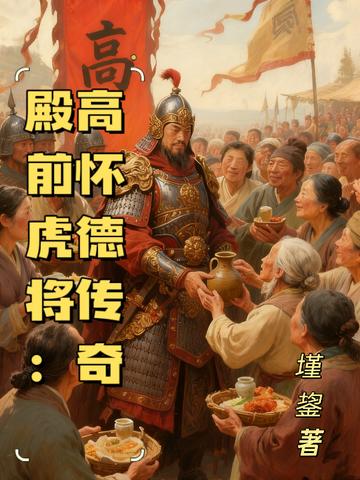
The General Before the Palace: The Legend of Gao Huaide
This historical epic follows the life of the renowned Northern Song general Gao Huaide through four stages: growing up, earning distinction under the Later Zhou, helping establish the Song Dynasty, and passing on his legacy in old age. It paints a vivid portrait of a military commander renowned for his courage and wisdom, kindness toward the people, and clear-eyed understanding of when to step back.
As a boy, he is the son of a military family in the Later Jin. He first displays his talent by shooting two birds with one arrow, then dons armor for the first time to guard a supply route, using a formation of supply carts to defeat Khitan cavalry. The spoiled young man becomes a rising star on the battlefield. During the Later Zhou, he follows Emperor Shizong on campaigns across the land, leading thirty horsemen across the Huai River to capture an enemy general and devising a fire attack to defeat the Southern Tang’s Chain Forts. An arrow pierces his arm, yet he continues to charge. His mix of firmness and compassion, shown when he forces a man’s head into icy water but refuses to kill recklessly, earns him the army’s trust as a commander. During the Chenqiao Mutiny, he reads the situation clearly and refuses to take up arms, saying he would rather avoid war and protect the people. This shows his rare insight. After entering the Song service, he helps Emperor Taizu put down rebellions, but refuses an imperial estate and relinquishes his military command early to avoid becoming too powerful and threatening the throne. While governing the provinces, he opens granaries to feed disaster victims, disguises himself to learn about their hardships and reduce taxes, and even dresses as a peddler to persuade bandits to surrender. “By the time the reply arrives, everyone will have starved to death.” With this sense of responsibility, he stays true to his commitment to care for the people.
Even in his later years, he can still put on armor and stand atop Taiyuan’s walls to protect a young officer. At his sickbed, he admonishes his descendants: “Military power is a double-edged sword. Protecting the people must come first.” When he dies, the people from miles around carry grain and weep as they see him off. Emperor Taizong personally composes his epitaph and bestows on him the name “Loyal Servant of the People.” His “Song of Breaking the Enemy’s Formation” is passed down among both the court and the common people, while his family teachings and agricultural techniques are preserved by his descendants through the generations. The inscription on the “Stone of Love for the People” in Guide, “The virtue of Lord Gao is like a spring breeze,” ultimately serves as the finest epitaph for a life defined by the principle that loyalty is not blind obedience, and caring for the people comes first.

I love writing novels, the content is so exciting