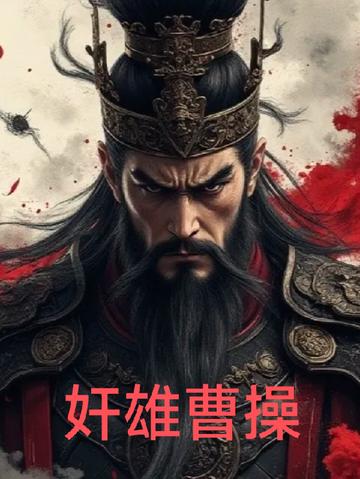
Cao Cao, courtesy name Mengde and childhood name Aman, was an outstanding politician, military strategist, writer, and poet during China’s Three Kingdoms period. He laid the foundations of the Cao Wei regime.
Born into an official family, Cao Cao was sharp and perceptive from a young age, though people viewed him as “a capable minister in times of peace and a treacherous hero in times of chaos.” He first distinguished himself during the Yellow Turban Rebellion. Later, he spent his entire fortune raising an army to campaign against Dong Zhuo, showing his ambition to restore order to the realm. In 196, he brought Emperor Xian of Han to Xudu, “holding the emperor to command the warlords” and gaining a political advantage. At the Battle of Guandu, he defeated Yuan Shao despite being outnumbered, effectively unifying the north and becoming the strongest power in the Central Plains.
During his rule, Cao Cao introduced the tuntian system to restore agricultural production. He appointed people on merit, breaking down the importance of family background and gathering talent from across the realm. A master of military strategy, he wrote A Brief Explanation of Sun Tzu. He was also a gifted poet: works such as “The Ballad of the Artemisia” and “A Short Song” are stirring yet mournful, and helped usher in the Jian’an literary style.
Yet he was naturally suspicious and ruthless. After killing the family of Lü Boshe, he reportedly declared, “I would rather wrong others than let others wrong me.” He also ordered the massacre of cities on multiple campaigns, earning lasting criticism. In 208, he was defeated by the Sun-Liu alliance at the Battle of Red Cliffs, thwarting his ambition to unify the realm. He never usurped the Han throne himself, but rose to the rank of King of Wei. His son Cao Pi later usurped the Han throne and founded Wei, posthumously honoring Cao Cao as Emperor Wu of Wei.
Cao Cao was a man of extraordinary ambition and talent, skilled in both letters and warfare, yet also known for his controversial methods. He remains one of the most complex and compelling heroes in Chinese history.