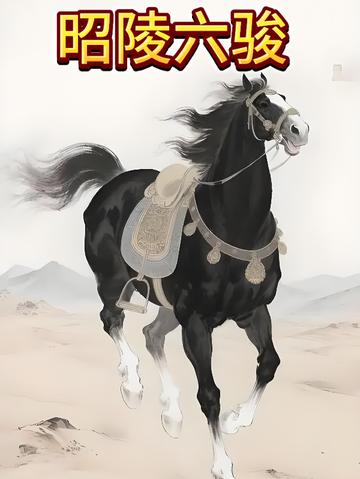
During the Zhenguan era of the Tang dynasty, Emperor Taizong Li Shimin issued an order to commemorate the founding heroes of his reign: the brothers Yan Liben were to carve six beloved steeds, “Tele Biao,” “Qing Zhui,” “Shi Fa Chi,” “Bai Ti Wu,” “Sa Lu Zi,” and “Quan Mao Gua,” to stand at the northern gate of Zhaoling. The stone horses bore witness to the splendor of the Tang dynasty and weathered a thousand years of storms through the Song, Yuan, Ming, and Qing dynasties, secretly protected for generations by the Wang family. In the chaos of the Republic of China era, the national treasures were plundered. “Sa Lu Zi” and “Quan Mao Gua” were taken to the United States, while the remaining four eventually found a home at the Xi'an Beilin Museum. After the founding of the People's Republic of China, the Wang family’s descendants joined forces with cultural heritage experts to reunite all six steeds in a virtual world through academic exchanges and digital technology. Spanning a thousand years, this story reflects the rise and fall of a nation through the fate of the stone horses, revealing the unyielding legacy of Chinese civilization and its long journey toward cultural revival.