During the Chengxi era, the Little Ice Age had not yet ended. Snow could crush a roof, but it could not freeze a person’s path to survival.
When Cheng Hui was ten, her mother tried to miscarry herself and the child she was carrying in the icy river to save a mouthful of food. Cheng Hui trudged through the snow and dragged her mother back, and in doing so, dragged herself into the grasp of fate. There was no transmigration, no cheat, only year after year of famine, tax collectors, marriage contracts, and account books.
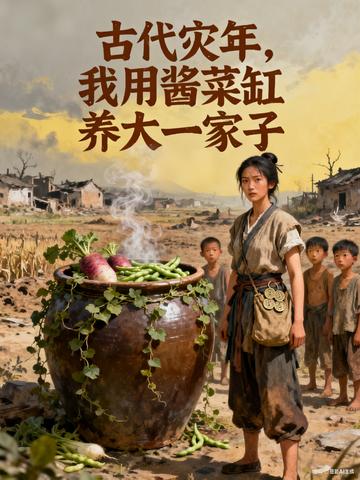
She began as a hired hand, learning to read and write, learning to keep accounts, learning how to stretch one tael of silver across ten expenses. Later, she married a farmer, and together they turned a dozen acres of poor land into more than a hundred, and a jar of pickled vegetables into a workshop whose products reached Tokyo. The snow kept falling, and the famine years kept coming. The men went to the prefectural capital to do earthworks for 120 copper coins a day; she and the other women spun yarn at home, making six liang of yarn overnight to earn enough to buy rice the next day. After returning home, they repaired canals, bought land, married off daughters, and welcomed daughters-in-law. She raised her nephew as her own son and spent a lifetime savoring the taste of pickles as if it were the taste of life itself. These were fifty years in the life of an ordinary family: a mother-in-law lying in state, a sister-in-law struggling through childbirth, an eldest son getting married, and a grandson working the fields. They were also the story of one generation of women growing up: from snowy rivers to field ridges, from the account desk to the workshop. She never received an imperial title, but with a single ledger, she won her family a security no title could buy.
Only when winter grows bitter do you learn the pine and cypress. They need not reach the sky; they need only stand firm in the snow.
Cheng Hui did nothing earth-shattering. In the simplest, slowest way, she made life into a field: snow burying it through winter, wheat turning green in summer. Fifty years, year after year, and that was eternity.




Warm and considerate
It's very interesting. It's the first time I've seen this type of article. I hope the author will continue to update it.