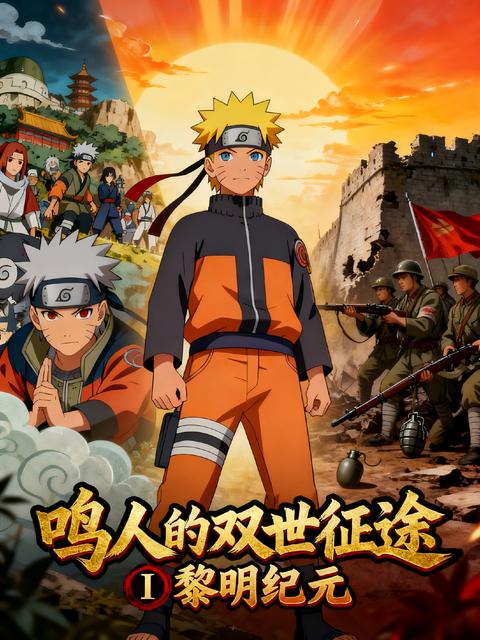
What would happen if Naruto Uzumaki were influenced by Marxism? The Seventh Hokage, Naruto Uzumaki, set out to enact reforms that would benefit ordinary people. But they threatened the interests of the feudal bloc led by the Fire Daimyo, and the reforms ultimately failed in a bloody coup. Konoha fell, and Sasuke Uchiha was gravely wounded protecting Naruto, left on the brink of death. In his desperation, Naruto activated a dangerous time-space device left behind by the Akatsuki. He and Sasuke plunged into a China battered by storms in 1913.
From struggling to survive on the streets of Shanghai, to the ideological awakening of Whampoa Military Academy, and then the thorough trials of the Agrarian Revolution and the flames of resistance against Japan, Naruto spent thirty years witnessing the entire tide of the New Democratic Revolution.
He was no longer a lone savior. He had learned to rely on the strength of the organization and the people. What he brought back was not a ready-made system, but the wisdom to analyze contradictions, the means to mobilize the masses, and a precious notebook recording the fruits of thirty years of thought. Returning to a homeland that had become unfamiliar, he discovered that his son Boruto had inherited his flame, while the horrifying truth behind the Akatsuki's time-space experiments gradually came to light. Naruto would wield the blade of “On Contradiction” to dissect the roots of the feudal system in the shinobi world and lead a monumental struggle to overthrow the Daimyo order and build a new shinobi world.