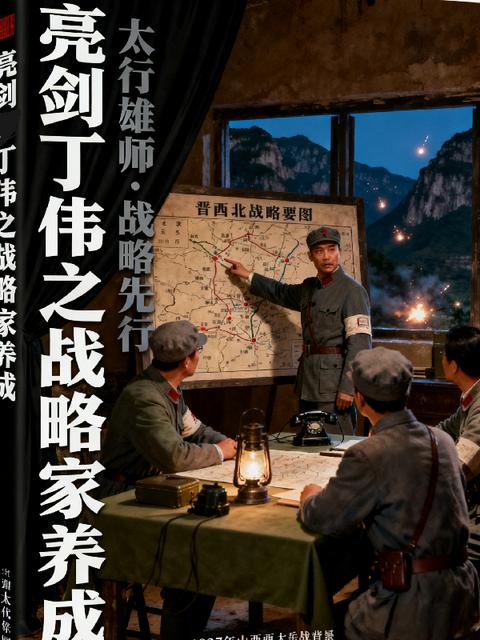
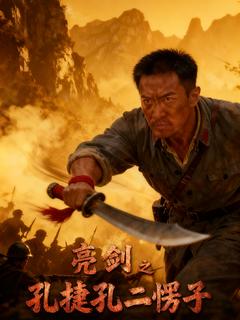
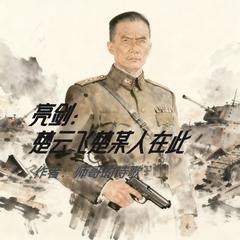
During the Battle of the Xiang River, he led his men in a rearguard action and carried Lin Xue, a student who had lost everything, out of a mountain of corpses. His life of blood and iron gained its first touch of tenderness. At the Anti-Japanese Military and Political University, he got drunk and swore brotherhood with Li Yunlong and Kong Jie, forging an unbreakable “Iron Triangle.” On the battlefield, he always anticipated the enemy’s moves. From the ambush at Heiyunyu to the relief operation at Ping’an City, he won one victory after another, yet his first public criticism came over a strategic paper warning of a threat from the north.
His personal fate became intertwined with his love for his country. The news of Lin Xue’s sacrifice dragged him into an abyss, while the fire of revenge forged an even sharper edge. Leading his troops into the Northeast, he proposed the astonishing “Grand Control Strategy” and proved his foresight with a great victory in western Liaoning. Yet he watched his closest subordinates fall one after another, and the cup of victory was filled with desolation.
After the founding of the People’s Republic, while everyone else basked in peace, he once again picked up his bloodstained pen and wrote an unwelcome truth in his military academy graduation thesis. This time, there was no stopping the storm. From fierce general to strategist, and finally a lonely prophet, Ding Wei spent his life demonstrating the ultimate meaning of a soldier’s loyalty: not only shedding blood on the battlefield, but also thinking and sacrificing everything for the future of his country.