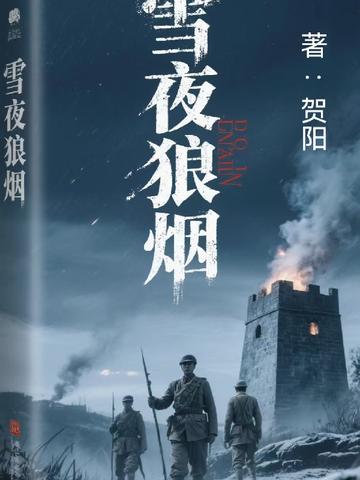
The story takes place in Northeast China during the War of Resistance Against Japanese Aggression, a region devastated by the Japanese invasion. After the September 18 Incident of 1931, Japanese forces swiftly occupied the Northeast, burning, killing, looting, and committing every kind of atrocity, bringing immense suffering to the local people. Rongxing Village, once a peaceful little settlement, was not spared. The Japanese army trampled mercilessly across the land, burning villagers' homes, seizing their grain, and brutally killing their loved ones. Driven to desperation, Zhao Wenlong, Ma Lijuan, and a group of brave villagers refused to submit to the Japanese forces' brutal rule. They resolutely took up arms and began a grueling struggle.
The unique geography and folk culture of Northeast China add rich color to the story. Winters here are long and bitterly cold, with snow falling in swirling flurries. The frozen landscape poses enormous challenges for the resistance fighters, but also serves as a natural barrier against the Japanese army. Northeastern customs and traditions, including shamanic rituals, winter fishing and hunting, and heated kang beds, are woven into the story. Even amid the fighting, the villagers hold fast to these traditions. They are not only part of daily life, but also a spiritual pillar that unites the people in resisting foreign invaders. The region's complex political situation also has a profound impact on the story. Alongside the Japanese invasion are the puppet rule of Manchukuo and the activities of various resistance forces. In this environment, Zhao Wenlong and the others must face not only the Japanese army's merciless campaigns to encircle and suppress them, but also a host of complicated situations. Their struggle is filled with hardship and challenge.