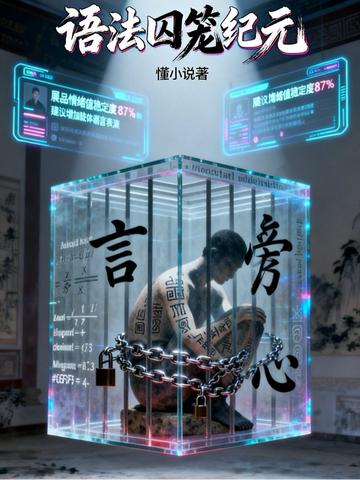
In the mid-22nd century, out-of-control gene-editing technology gives rise to “New Humans,” a population enhanced with perfect genes and endowed with greater physical strength, intelligence, and longevity. They regard “Old Humans,” shaped by natural evolution, as an “endangered species” with genetic defects. In the name of “species conservation,” the New Human government establishes twelve “Old Human Nature Reserves” around the world. In reality, they are enormous zoos where the surviving Old Humans are held captive for New Humans to observe and study.
The story follows Chen Yan, an Old Human linguist. Because she is fluent in thirty-seven endangered human languages, including Basque and Ubykh, she is forcibly appointed by the New Humans to write the commentary for an “Old Human Zoo.” Her job is to “educate” visitors about Old Humans’ “physical characteristics,” “social habits,” and “remnants of civilization.” Chen Yan appears to comply, but secretly uses her linguistic expertise to hide coded messages in the commentary, exhibit labels, and park broadcasts. She connects Old Humans across the reserves and builds a resistance network that transcends their isolation.
Core themes:
• An inverted apocalypse: Humanity falls from master of civilization to an object of observation, exploring the boundaries of what “humanity” means;
• Language as power: When the ruling class disciplines language, “useless languages” on the verge of extinction become the ultimate weapon of resistance;
• Existential crisis: In a world reshaped by AI and genetic technology, how can “imperfect” Old Humans prove that their existence has value?