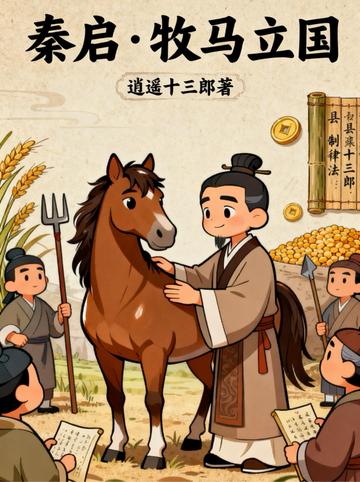
Qin Qi: Raising Horses and Founding a Nation
秦启:牧马立国
- Status
- Completed
- Length
- 340k Words
- Genre
- Historical
- Subgenre
- Historical & Ancient
- Updated
- 11mo ago
- Source
- Fanqie
Synopsis
More by this author
 The Coroner and the Seventh Door
 The Dragon Lantern Calamity
 Together with An, We Shine in Splendor
 A Mistaken Melody: An Lingrong Reborn
 Qin Li: Expanding the Realm Across Four Generations
 I Can Never Escape My Longing for You
 The Pawnshop of Obsessions
 Daiyu Reborn: The Merchant Woman Who Defied Fate
 The Chang'an Conspiracy
 The Order of the Cold Boat
 Yu Qinghuan
 The Flower Demon’s Tribulation
In booklists 42
Explore more →

The Best of the Best in Historical Fiction
Historical Novels, Realistic and Lengthy, Please
History Novels That Get Your Blood Pumping
The emperor defends the nation's borders; the ruler dies for the state.



The AI-Writing Army Is Coming: Do Ordinary Writers Still Have a Chance?
Recently, a huge wave of AI writers has flooded Fanfan. It's hard to tell whether these AI-written stories are real, and their quality is all over the place. Ordinary writers keep losing their share of the remaining traffic in this flood. What are we supposed to do?



Are There No Original Stories? They’re All the Same, Like They Were Made from a Template
Looking for books similar to "Transmigrated as a Treacherous Minister’s Legitimate Daughter, She Plays Herself to Perfection".
Pure Military Fiction: Battles Between Ancient Armies and Legions
Military and war

Brilliant Historical Fiction, Rated 9 or Higher, Meticulously Researched, with a Down-to-Earth Protagonist
I've read a lot of stories like this, even some highly rated ones, but their protagonists all seem to have an arrogant, godlike perspective. Since they know how things unfold and how they end, they spoil everything for the locals and act smug about it. It's really uncomfortable, and they show no respect for history.
The Seven Warring States and the Chu-Han Contention
Any recommendations for novels set during the Warring States period? Any part of the era is fine. Stories about the end of the Qin dynasty and the Chu-Han contention are welcome too.

Brilliant Political Schemes: Always Ten Moves Ahead
I'm looking for books like "The Story of the Hairpin" (Complete in 4 Volumes).
Historical Stories (Any Dynasty, No System, and with Intelligent Characters)
Looking for books like "The Glory of the Great Wei". Historical novels with some brains behind them. Read too many mindless wish-fulfillment stories and they’ll rot your mind.
Looking for Meticulously Researched Historical Fiction
They seem pretty hard to find. Let's give it a try.
The Best Historical Novels From Every Dynasty
Preferably a book rated above 9.

Historical Novels Based on Official History
Historical novels based on official history, not unofficial accounts. Any dynasty is fine, but it absolutely has to be official history! Official history! Please! Historical fiction is really useful to me.



Deep, Thought-Provoking Stories That Feel Like Masterpieces
Something like "The Three-Body Problem", for example.
High-Quality Historical Novels With Political Intrigue
Looking for books like "My Father Is Emperor Wu of Han!" Nothing rated below 9.0, please. I'm in a serious reading slump.


Now This Is the Kind of Novel Chinese People Should Read
As fellow Chinese people, you'll feel your blood boil after reading this.

Absolutely Pro-Qin and Pro-Emperor Qin Shi Huang, No Backhanded Praise!! Nothing Like That
I'd like a book like Watching the Ancients Choke Up: They All Favor the First Emperor. For example, this one has a sky screen. In the Qin dynasty, it appears every year starting from the First Emperor's birth. Other dynasties depend on the circumstances: for example, the Han dynasty might have one sky screen for each person sent to guard a tomb, or...
My Favorite Historical Novel on Tomato Novel
I'm looking for books like Taking Another Name in Langya. Transmigration isn't a dinner party; it's a deadly game at every turn. The plot should be vivid and interesting, with side characters who are smart. The protagonist should slaughter their way through life-or-death situations. It should be historically accurate, with a natural romance.

Historically Accurate, Without Making Things Up
Historical fiction has more room for worldbuilding, with vivid characters and no distortion of history. I want a satisfying read that covers dynasties, major and minor events, wars, and loyal civil and military officials, all presented in a historical setting.

High-Quality Farming Stories: Build Strong Walls, Stockpile Grain, and Claim the Throne Later, While Developing Firearms in Ancient Times
Looking for Qin Dynasty Stories With Highly Intelligent Characters. Don't Write the King of Qin Like an Idiot
Ying Zheng is ruthless and shrewd in politics. Don't make it seem like he's treating the protagonist like some immortal.
The Pinnacle of Historical Fiction
I'm looking for the definitive masterpiece for each historical era, the one that no other work can match. For example, the Song dynasty's greatest work is "Song of the Southern Dynasty". Are there similar books for other dynasties?
The True History of China
Looking for books similar to Five Thousand Years of Chinese History. Not fictional historical novels, but real events backed by evidence.

Looking for Stories Where the Protagonist Ascends the Throne as a Child
For example, novels featuring emperors such as Zhengde, Wanli, Tongzhi, and Guangxu.
Reader comments 5
Translated by Google Translate
A very nice story about Da Qin, I must give it a good review. Questioning civilization on horseback: I saw the genetic code of a dynasty in "Qin Qi Herding Horses and Founding a Country" While most history books focus on the rise of the Qin State on Shang Yang's thunderous methods of reform, "Qin Qi Herding Horses and Founding the Kingdom" draws its attention back to a more distant starting point - the western frontier grassland regarded as the "Land of Barbarians and Di" by the Central Plains countries. It uses delicate writing to deconstruct the Qin State's original civilization code hidden behind the act of "herding horses". The book does not pile up boring historical materials, but uses "horse" as the narrative anchor to connect the Qin people's survival wisdom and the foundation of the country. From the nomadic experience of living in pursuit of water and grass in the tribal era, to the management system learned when raising horses for the Zhou royal family; from the military prototype built by the war horse breeding system, to the governing logic extended by the "Way of Controlling Horses", the author progressively explains Proof: The Qin State did not achieve success overnight with the help of "reforms", but in the hundreds of years of coexistence with horses, it has already tempered its national background of tenacity, pragmatism and martial arts - this background is the spiritual cornerstone of the later annexation of six countries and the determination of the world. What's even more rare is that the author did not fall into the "heroic view of history", but instead focused on ordinary shepherds, horsemakers, and soldiers. By restoring their daily life of taming, raising, and protecting horses, readers can truly feel that the rise of the Qin State has never been a "personal legend" of a few monarchs, but a collective epic of countless Qin people trampling the grasslands with their horse hooves and watering the pastures with their sweat. The scars and honors attached to the horses eventually turned into indelible marks on the territory of the Qin Empire. When I close the page of the book and think of the word "Qin" again, I no longer only have the majesty of the Terracotta Warriors and the majesty of the Great Wall in my mind, but also the galloping horses on the grasslands of the western frontier, and the group of ancestors who walked with the horses and opened up the road to civilization in desperate situations. This book uses a unique perspective to open a new window for us to understand the origin of the Qin Empire.
From Horse Wrangler to Lord of the World: "Qin Qi Herds Horses and Founded a Country" to unlock the original code for the rise of the Qin Dynasty Most historical narratives attribute the power of the Qin State to the later reforms and conquests, but "Qin Qi Herding Horses and Founding the Kingdom" goes against the flow of time and focuses on the group of Qin people who accompanied horses on the western frontier grasslands. It uses solid historical materials and vivid narratives to reveal an overlooked truth: Qin's hegemony was foreshadowed as early as the years of herding horses to live in pursuit of water and grass. The book uses "horse" as a clue to connect the Qin people's survival logic and the foundation of the country. Herding horses for the Zhou royal family was not only a means of livelihood, but also taught the Qin people standardized management and discipline; in their dealings with the grassland tribes, war horses became their "mobile fortress", giving birth to military genes that were flexible and good at fighting; even the pragmatic character of the Qin people was in line with the survival wisdom of the horse herders who needed to adapt to the weather and respect nature. The author does not talk about history in vain, but by restoring the details of herdsmen's horse training, pasture management system, and the role of war horses on the battlefield, readers can truly feel that the strength of the Qin State is not accidental, but the precipitation and explosion of the "horse herding spirit" day after day. The most rare thing is that this book breaks the "Central Plains-centrism" perspective and looks squarely at the background of the Qin people's "Yidi" origins. It tells us that it was this wildness and tenacity that was not bound by the ethics of the Central Plains that allowed the Qin people to fight their way through the difficult environment, and finally turned the endurance and fierceness of herding horses into a majestic force that swept across the six kingdoms. When we read in the book that the people of Qin used horse whips to measure the land and use horse hooves to stamp out the territory, we truly understood: The world of Qin began with the first sound of horse hoofbeats on the grassland.
The brave and brave old Qin fought against the national calamity together, and the brave and brave old Qin restored our rivers and mountains. Such powerful words, this is the romance of the old Qin people.
I like this novel, it's very well written.
Qin Feizi used his sharp sword to quell civil strife and expanded his territory with his strength. The plot interweaves the iron-blooded war with the feelings of family and country, making it a hearty read.