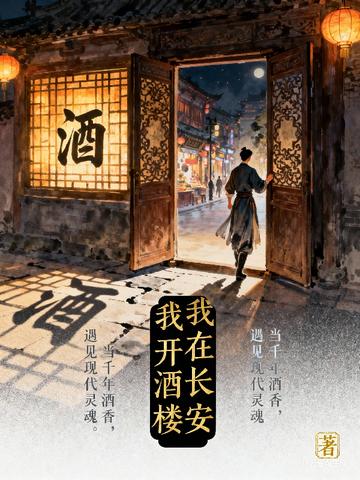
An exploding gas stove sends Jiang Yanzhou, a modern Sichuan cuisine chef, back to the twelfth year of the Zhenguan era in the Tang dynasty.
When he wakes, he is on a donkey cart in Chang’an’s West Market, having become the “dead son of a foreign merchant” whom everyone avoids.
He has no interest in battles or schemes for the throne. He just wants to stay alive and, while he’s at it, let the people of the Tang dynasty taste a hot stir-fried dish.
A wok clatters down, and the fire blazes.
The aroma of “shredded pork with green peppers” carries for miles. “Mapo tofu” brings the West Market to tears. “Twice-cooked pork” is served before the emperor...
Li Shimin takes a bite and slaps the table. “I haven’t had an appetite like this in thirty years!”
Li Ke comes in disguise to cadge a meal, then refuses to leave after eating. “Another bowl, please. Can I pay with a poem?”
The Turkic princess Yunzhu takes on the “spicy hotpot challenge.” She jumps around with a burning mouth, shouting, “I’m taking this flavor back to the grasslands to spice up a hundred thousand cavalrymen!”
He opens a restaurant called Home of Everyday Delights.
He doesn’t hold banquets for the powerful. He just wants to stir-fry a bowl of everyday goodness for the common people.
He writes The Record of Everyday Delights and spreads the “wok revolution,”
bringing woks into every household and setting the taste buds of a prosperous age alight with spicy aromas.
He takes in an orphan girl as his apprentice and teaches her to chop vegetables and read.
“I’m going to be the first female head chef in the Tang dynasty!” she declares.
He stands shoulder to shoulder with the talented Su Yanqiu.
One wields the spatula, the other the brush,
and together they turn the “everyday bustle of the streets” into “sound policies for governing the country.”
But even the most prosperous age must come to an end.
When the flames of the An Lushan Rebellion rise and Chang’an teeters on the brink of destruction,
he and his apprentices protect the last stove:
“As long as the fire burns, the wok remains, and the flavor lives on!”
One bowl of rice, one sizzling wok,
with the Tang dynasty on the tip of his tongue,
he cooks up the warmth of an entire age.