Repairing Time, Finding Each Other
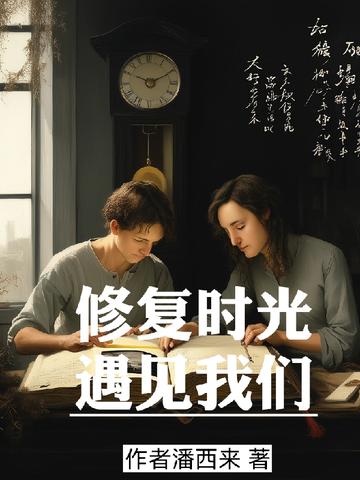
Su Wan runs Wanyanzhai, the antique bookshop her grandfather left behind, and earns her living restoring ancient books. She is determined to return every damaged page to “flawless perfection.” Chen Yan is a deep-sea photographer who is always chasing distant whale falls and bioluminescence, believing that a camera should capture “breathtaking moments.” Their seemingly parallel paths cross over a Qing-dynasty collection of letters, The Jiang Family Letters. In them, Nianqing and A Yuan argue for ten years over “following their dreams” versus “staying home to care for the family,” and finally reconcile over tea back in their hometown. Their story becomes a mirror reflecting the things Su Wan and Chen Yan are each unable to let go of.
From the surprise of accidentally spilling cinnabar ink and creating a “deep-sea ripple” pattern, to the quiet companionship of restoring books and making coffee side by side late at night; from Chen Yan’s guilt over neglecting Su Wan while photographing the deep sea, to Su Wan realizing through book restoration that “a repaired mark doesn’t have to be invisible”; from Chen Yan’s mother reminding them that “what’s real is what deserves to be kept,” to Uncle Zhang’s life wisdom hidden in his fragrant, golden osmanthus cakes, the two gradually stop chasing perfection. Chen Yan’s camera no longer points only at the deep sea. He starts capturing Su Wan’s silhouette as she gathers shells, her messy struggle to wipe away ink stains, and her smiling face as she makes rubbings with Xiaoyu. Su Wan no longer tries to erase every trace in her restorations, instead cherishing the “imperfections” that bear Chen Yan’s warmth: the ginkgo leaves he photographed tucked into her notebook, and the notes he wrote beside her rubbing templates.
The ginkgo trees at Wanyanzhai turn yellow and shed their leaves again, and the restoration of the letter collection nears completion. The two put on a small exhibition in the courtyard called “Everyday Life and Reconciliation.” On the walls hang photos of them making dumplings with flour on their clothes and sharing hot tea after an argument; in the display case are the letters between A Yuan and Nianqing


This chapter is a key node in promoting the emotional line between Chen Yan and Su Wan. The overall rhythm is delicate and the characters are vivid. It not only continues the gentle atmosphere of the previous chapter, but also lays the foundation for the subsequent plot. The highlights can be expanded from the following aspects: 1. Character creation: reality can be seen in contrast - Chen Yan's "obsession" and "delicacy": in the opening chapter, "stroking and giggling at the photo" and "making excuses to protect Su Wan" made his "obsession" for Su Wan concrete; but in the follow-up, he did not use "brute force" and went to a time-honored literary store to buy it. The paperweight, remembering Su Wan's love for drinking sweet soy milk, and drawing a little sun on a sticky note also highlight his "delicate and considerate" side - he understands that Su Wan needs to be cared for like an "ancient book", instead of using the routine of chasing people in the past, the character arc is more three-dimensional. - Zhao Ye's "harm" and "warmth": As a child, he teased Chen Yan with "forced kisses" and "stalking", but his words were venomous ("By the time you figure it out, he will have been abducted"); but he did not forcefully persuade him, and in the end he helped save the tickets for the photography exhibition, which was actually a silent assist. This "harmful concern" is very close to reality, and it also neutralized Chen Yan's "boring", making the scene more lifelike. - Lu Mingxuan's "defense" and "softness": His "cold rebuke" to Chen Yan ("You are not from the same group") stems from the protection of Su Wan, not malice; in the end, he relented and said "you can do it yourself", which not only maintained his position but also left room for leeway, avoiding the flattening of the "tool villain" and adding a layer of reasonable resistance to Chen Yan's pursuit. 2. Emotional advancement: "Slow motion" hides the heartbeat There is no fierce conflict in this chapter, but the "details that touch the heart" make the emotions naturally warm up: - Chen Yan's "retreat" is equal to "enter": he did not go to Su Wan directly, but only put the paperweight and ink at the door, with the postscript "throw it away if you don't like it." This not only conveyed the intention of "remembering your preferences", but also did not put pressure on Su Wan - this "gentleness without intrusion" just poked at Su Wan's sensitive character and made her "crack the barrier in her heart." - Su Wan's "softness" is hidden in the details: "Fingertips brushed against the woody fragrance of the paperweight" and "My heart felt sour and soft". There was no direct "movement", but she used movements and psychological descriptions to imply that her impression of Chen Yan changed from "rejection" to "looseness", paving the way for subsequent invitations to photo exhibitions. The emotional transition was real and unobtrusive. 3. Atmosphere and structure: details create the environment, echoing from beginning to end - The details of the scene heighten the mood: the "warm yellow light photo album" in the studio, the "sawdust and wood fragrance" in the study shop, and the "jam in the wooden door of Wan Yanzhai" in the old street. These picturesque descriptions fill the "gentle and slightly sour atmosphere of secret love", allowing readers to immerse themselves in Chen Yan's expectations and Su Wan's wavering. - The opening words and the ending song echo the theme: the opening song "Nanxiangzi·Crazy" "I dare not hide my obsession, I just want to be with her for the rest of my life" refers to Chen Yan's obsession; the ending song "I Believe" "I can get close to you as long as I persist" not only echoes Chen Yan's determination to "take it slow", but also hints at the future direction of the emotional line. The structure is complete and relevant to the title. Overall, this chapter is an excellent fragment of the "slow-heat emotional line" - it does not rely on blood to promote, but uses the characters' personalities and detailed interactions to let emotions grow naturally. It not only consolidates the charm of the core character, but also makes readers full of expectations for the subsequent "Photography Exhibition Invitation", which plays a very good role in "connecting the previous and the following". ❤️