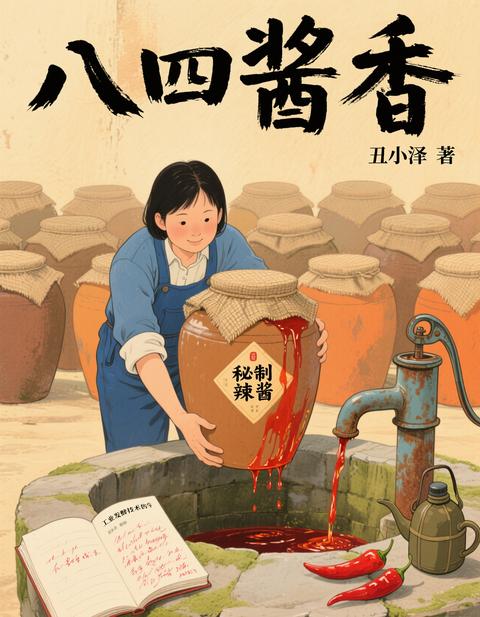
The Eighty-Fourth Year of Soy Sauce is set in Qingchuan, a small southern city in 1984. It tells the story of Chen Wanming, a sent-down youth who has returned to the city and is determined to fulfill her father’s dying wish, despite the stigma of his “speculation and profiteering” conviction. Armed with an ancestral chili sauce recipe and notes on Industrial Fermentation Technology, she assembles a grassroots team and launches a business in the cracks between conflicting policies. From the subdistrict office’s cold refusal to issue a license, to the supply cooperative’s contempt and the urban management officers driving them away; from Factory Director Guo’s vicious forgery of a debt note and arson frame-up, to Xia Yu’s betrayal and struggle to return, the team relies on grassroots ingenuity, from “greasing the gears with lard” and “taste-testing with a military canteen” to “snatching the account books on a stormy night,” to cut a path through the state-owned economy’s monopoly.
The novel uses the secret sauce recipe as a thread connecting the hardships and opportunities faced by individual entrepreneurs in the early days of Reform and Opening-Up. Shen Fei’s craftsmanship in making display stands from scrap, Wang Peng’s brotherly loyalty as he uses military code to defuse crises, and Zhou Qiang’s gray-area survival tactics on the fringes of power together paint a portrait of ordinary people during the transition from a planned economy to a market economy. In the end, the team wins international recognition at the Canton Fair with its distinctive soy sauce aroma and “self-reliance” booth design. Then, with the passing of the Interim Regulations on Private Enterprises, they turn the slur “speculation and profiteering” into a badge of honor for “pioneers riding the tide” of reform.
This work is not just an epic tale of entrepreneurship, but also a paean to perseverance, loyalty, and the spirit of an age. The line “Dad, this isn’t speculation and profiteering anymore” captures how a generation used their passion and craftsmanship to weave their individual destinies into the sweeping tide of national development.