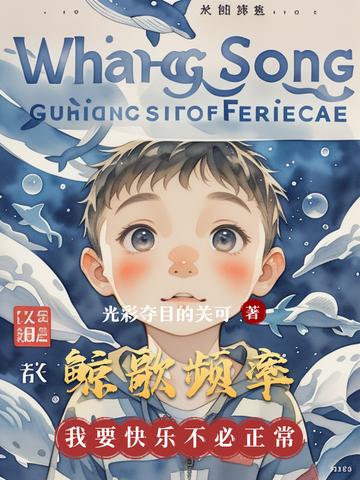
When her son, Sensen, is diagnosed with autism spectrum disorder, Su Qing’s world collapses. The sweet hopes she once had for the future are torn to shreds by endless confusion and frustration, and the harsh label of “abnormal.” Sensen is like a small asteroid orbiting alone. He immerses himself in the rhythms of numbers, deaf to the noise of the world. A hug can leave him panicked, while the texture of a fallen leaf can hold his gaze for a long time. Su Qing struggles through tears and despair, feeling that an uncrossable ocean trench lies between her and her own son.
Yet a mother’s instinct refuses to let her sink. Clumsily, she learns ABA and Floor Time, decoding every subtle glance and gesture from Sensen as if cracking a code. She stands up to the stares of others, builds a fortress against his meltdowns in supermarkets, and searches through countless sleepless nights for a bridge to communication. The road is full of thorns: her husband’s avoidance, other people’s misunderstandings, and her own exhaustion push her to the brink time and again. But Sensen’s occasional flashes of astonishing talent, his smile as pure as freshly fallen snow, and the cookie he offers with clumsy yet earnest effort all become faint lights piercing the darkness.
This is not a story of a miraculous cure. It is the journey of a mother who sinks into a silent ocean and finally learns to listen to a unique “whale-song frequency.” Su Qing gradually understands that Sensen is not incomplete and in need of being “fixed.” He has a whole and singular inner universe, brilliant as the aurora. In the end, love is not about pulling Sensen onto the track of “normality.” It is about Su Qing bravely setting foot on his planet and discovering, amid endless starlight and silence, the most primal and enduring form of love: accepting differences.



Children with autism are a growing group. Anyone who has ever been a mother or father, or a parent with a child with special needs, will definitely sympathize with, resonate with, and gain something from this novel. Those who have never been a mother or father can also learn about such children in advance. This kind of child is the embodiment of species diversity. In the past, people may have been prejudiced against such children, but with the progress of the times, more and more people have understood autism, and they will become more and more tolerant of such children. The writing of this book The purpose is just to let more people understand the autistic group, hope that everyone can be tolerant of this special group, and hope that society can tolerate them. They are a group of pitiful people, and hope that the world will have more warmth and less hurt. This topic itself is not a hot topic. There are definitely fewer families with special children than normal children. The author hopes that especially non-autistic families can also understand more and have more love for special children. Thank you all 😘😘😘