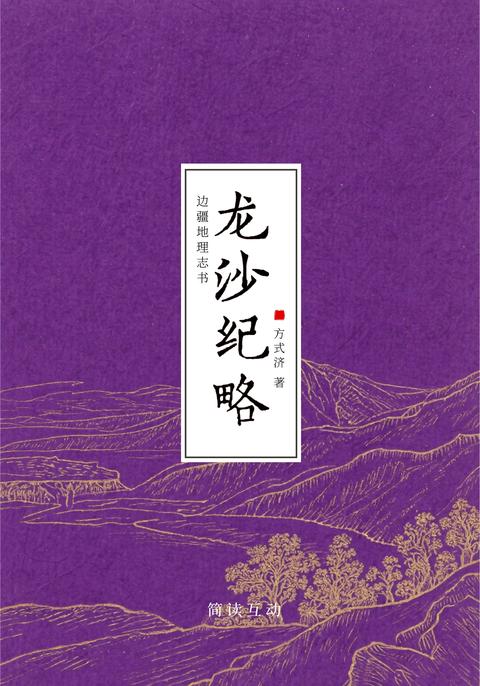
The Illustrated Account of Longsha reads like a firsthand record of life on the early Qing frontier. From its opening, it transports readers to the vast Heilongjiang River basin, vividly portraying life beyond the border and the customs of its diverse peoples. The book was written by Fang Shiji, a Qing-dynasty jinshi. After his father became embroiled in a literary inquisition, Fang moved with his family to Heilongjiang. He experienced life on the frontier firsthand and recorded what he saw and felt, creating an important document on the northeastern frontier.
The book is divided into nine sections. "Boundaries and Regions" outlines the borders and important locations of the Heilongjiang River basin, while "Mountains and Rivers" details the courses and landscapes of waterways such as the Ussuri and Nonni rivers. "Administration" records frontier government offices and military deployments. "Customs" describes the clothing, wedding traditions, hunting, and festivals of the Oroqen, Solon, Daur, and other peoples. "Seasons" reflects the rhythm of life under extreme climatic conditions. The remaining sections discuss food, tribute, local products, and architecture, offering a wealth of detailed information.
The book describes the military and civil administration of important towns such as Bukui and Mergen. It records winters so bitter that water froze as it fell, with winds and snow that cut to the bone, and recounts how frontier residents subsisted on buckwheat, sable, and fish. Among the tribute goods it lists are sable pelts, pearls, huashui, and laoqiangcai, revealing the region's abundant resources.
The Illustrated Account of Longsha is only about twelve thousand characters long, yet it is concise and comprehensive, covering nearly every aspect of the Heilongjiang region in the early Qing dynasty, from geography and government to ethnic groups, economics, and customs. It is an invaluable source for the study of the history, geography, and ethnic life of northeastern China.