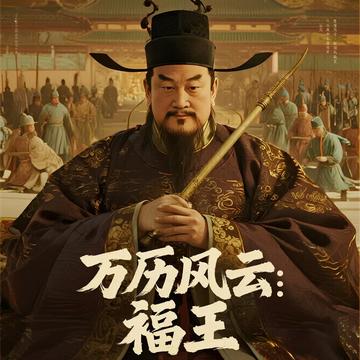
In 1596, the twenty-fourth year of the Wanli reign, a modern scholar well versed in Ming history and political science transmigrates into the body of sixteen-year-old Zhu Changxun, the Prince of Fu. The “Succession Dispute” is reaching its peak: the Wanli Emperor wants to disinherit his eldest son in favor of a younger one, but the court resists. Caught at the center of the political maelstrom, the protagonist is treated as a bargaining chip by his imperial father, hated by the Crown Prince’s faction, and regarded by the scholar-officials as a symbol of “upending ritual and law.” To survive on the eve of the Ming dynasty’s final collapse, he abandons any hope of claiming the throne and secretly lays his plans as a vassal prince.
Economically: using the prince’s estates as a pilot project, he promotes sweet potatoes and corn, improves textile production, and streamlines logistics to build the “Fu Principality Consortium.”
Militarily: under the guise of “the prince’s household guards,” he trains troops in Liaodong, infiltrates the garrisons along the Nine Frontiers, and befriends veterans of the Qi family army.
Politically: he maneuvers among the Emperor’s faction, the Empress’s faction, the Donglin faction, and the eunuch faction, supports men of humble origins, and plants the seeds of reform.
Technologically: he guides Xu Guangqi in combining Chinese and Western technologies and improving firearms and farm tools, avoiding talk of “curious and useless contraptions” and instead emphasizing practical learning.
From the defeat at Sarhu to Chongzhen’s suicide, the protagonist relies on forty years of patience and strategy. Amid the competing forces of imperial power, the gentry, refugees, and the Jianzhou Jurchens, he preserves the last of China’s strength.




His character is very different from that of King Fu in history.