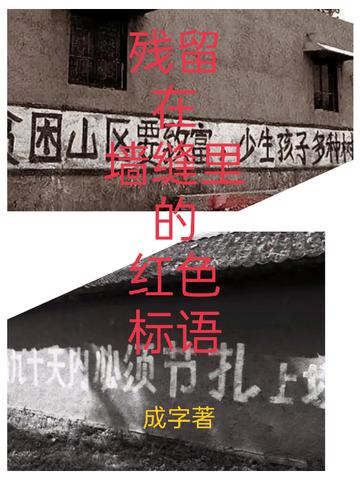
This is a family history hidden in the cracks of a wall, and an epic of survival for a generation of Chinese people.
In the 1980s, in Liaocheng County in southern Henan, Wang Jianjun and his wife wanted a son. Under the family planning policy, they were forced to wander from place to place. They traveled from an abandoned kiln in Anhui to the mountains of Huoqiu County, scraping by through backbreaking work hauling goods on a handcart. They struggled between the slogan “One child is best” and the traditional belief that more children, more blessings. The births of their eldest daughter, Zhaodi, and second daughter, Dाईdi, later renamed Wang Pan, did nothing to lessen their longing for a boy. It was only after their youngest son, Shengli, was born with the help of mountain villagers that the family returned home, where they faced fines and sterilization.
Decades later, Zhaodi has become a scholar of population policy, Wang Pan teaches in Xinjiang, and Shengli runs a cooperative in his hometown. The slogans on the old wall have changed from “Fewer births, better births” to “The era of three children,” while fragments of kiln bricks, patched clothes, and names written in schoolbooks have become rings linking the past and present.
Looking back on those years of hiding and fleeing, they finally understand: happiness is the journey from merely surviving to living well, and the way each generation gives everything it has to grow amid the tides of the times. The slogans on the old wall will fade, but the rings beneath it will forever bear witness: life is endured into something better, and hope is something that grows. I hope you enjoy the story. Your support is what keeps me writing, and I’ll do my best to tell every story well!