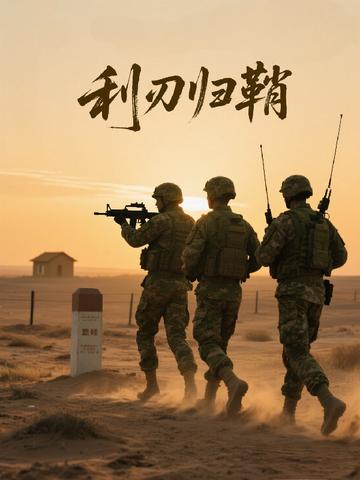
The wind along the border always carries sand. Lu Chenzhou was crouched in a corner of the radar station, holding a repair tool, when his wrench suddenly slipped. On the monitor, a ship belonging to the smuggling gang Black Sand was breaking through the security line, gun barrels gleaming in the moonlight.
Three years ago, when he took off his special forces uniform, the medal his old captain tossed at him struck the table. “You could protect the hostages, but you couldn’t protect your own insignia.” Now the old captain’s voice crackled through the phone across the Gobi Desert. “Black Sand’s cargo includes missile components. Their target is the oil and gas pipeline.”
Returning to the unit means returning to the battlefield. Su Qing is a sniper who can lock onto targets in a sandstorm. Lin Ye can run five kilometers across the desert with a radio on his back. Tieshan charges at the front with a battering ram. This team must climb across wind-eroded rocks in the Gobi canyons, weave through the pipes of an abandoned factory, and finally stop the Po Lang as it flees toward international waters.
Sand has jammed their rifle chambers. Photos of their teammates are tucked into their vests. Their GPS coordinates always lead them toward danger. When Black Sand’s leader threatens civilians with a detonator, Lu Chenzhou pulls out the engineer’s spade passed down from his father. Reflected in its blade are the glint of Su Qing’s scope, the crackle of Lin Ye’s radio, Tieshan’s roar, and the backs of the people who stand together like a wall.
A blade is drawn not to kill, but to let more people sleep in peace.