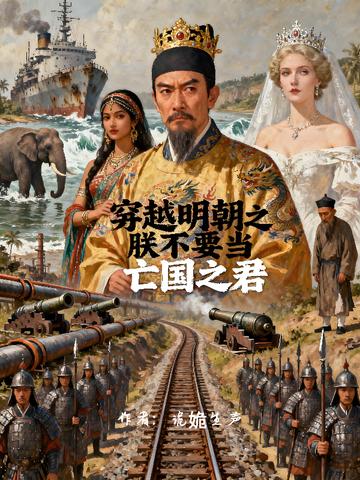
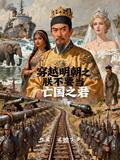
In Transmigrating to the Ming Dynasty: I Refuse to Be the Emperor Who Loses His Country, modern-day overworked office worker Xiao Xiaoxiao dies suddenly and transmigrates into the body of the Chongzhen Emperor, who had failed in his attempt to hang himself. With the capital fallen and the dynasty on the brink of collapse, he draws on his modern knowledge and leads his loyal followers on a desperate struggle to survive. From fleeing for his life to establishing a foothold in Shandong, he resolutely launches a land revolution under the principle that “the tiller should own the land,” wins the people’s support, and forms the Jingnan Army. He defeats Li Zicheng and Wu Sangui in turn, then recaptures Beijing.
He next turns his sword beyond the passes, fights fiercely in Liaodong, and finally captures Shengjing, destroying the heart of the Manchu Qing. Then he leads a western campaign, pacifies Zhang Xianzhong, and brings the southwest under control. Once firmly established, he sets his sights on the seas and the continent. Through technological innovation, including the development of the petroleum industry and early steam engines, and military reform, he launches an epic expansion. His armies sweep across Central Asia and bring Persia to heel, while his fleets sail south to control the Indian Ocean and eliminate Western colonial outposts.
Facing the “Holy Alliance” formed by the Western powers, he wins a bloody victory through iron-fisted rule, technology, and strategic foresight. In the end, under his intimidating power, Empress Catherine II of Russia, the northern “Rakshasa,” actively seeks peace and proposes a marriage alliance, offering her submission. By this point, a vast empire stretching from Siberia in the north to the Indian Ocean in the south, and from the west to the Caspian Sea, has taken shape. Xiao Xiaoxiao, the transmigrated emperor of a fallen dynasty, uses modern wisdom and unyielding resolve to raise the Ming to unprecedented global supremacy. The journey of this Eurasian superpower is far from over.