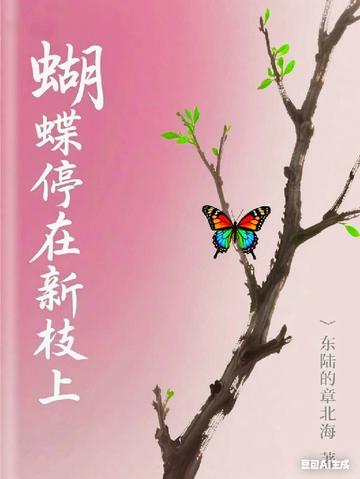
In a quiet corner of A University's library, surrounded by the scent of old books and plane trees, architecture student Zhu Wan, nicknamed “Brother Zhu,” was a capable, no-nonsense tomboy and top student in her classmates' eyes. She hid her gender beneath loose workwear and tied up her long hair, all to escape her family's endless attempts to set her up and protect her dream of dedicating herself to restoring ancient architecture. It was a promise her grandmother had entrusted to her on her deathbed, after a lifetime of regrets: “Live for yourself, just once.”
Lin Zhou, a programming prodigy in the computer science department, searched for the logic of cold, precise code in meticulous paintings and ancient books. One day, while borrowing a pen, he stumbled upon Zhu Wan's secret: the girl who copied the meticulous painting Butterfly Lovers, her fingertips scented with turpentine, had a notebook filled with advanced mechanics equations. She was like a building full of contradictions, its sweeping eaves bearing a thousand years of theatrical tales, while its beams and pillars were supported by the most precise calculations.
When a model for restoring ancient architecture joined their fates like interlocking mortise-and-tenon joints, Lin Zhou saw the warm yellow light Zhu Wan brushed onto the eaves late at night and glimpsed her vulnerability as she gazed at a photo of an old opera stage. Zhu Wan, meanwhile, discovered the ink-wash poems hidden beyond Lin Zhou's code. Their feelings quietly took root between the butterfly wings of digital projections and the wooden opera stage. But Zhu Wan's domineering mother barged in and shattered their peace. Confiscated blueprints, locked doors, and threats to force her to leave school pushed Zhu Wan to the brink of despair.
Amid the scattered scraps of blueprints, Lin Zhou understood her fear. “If I weren't ‘Brother Zhu,’ would you still walk this path with me?” He didn't force his way in. Instead, line by line, he used code to rebuild their shared dream in a virtual world