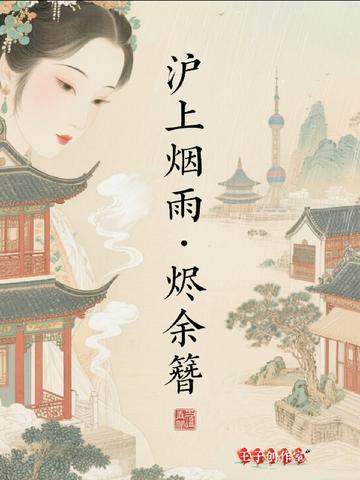
Shanghai in the 1920s: neon lights and artillery fire mingled across the glittering foreign concessions. Su Hengqing, the orphaned daughter of a Suzhou embroidery shop owner, arrived seeking refuge with a white jade hairpin engraved with the character “Heng.” She made a living with her astonishing Suzhou embroidery, unaware that the hairpin concealed an old feud tied to the silk magnate Shen family, as well as questions surrounding the fire that wiped out her family. Shen Yanzhou, heir to the Shen family and recently returned from studying abroad, became intrigued by her after seeing the hairpin's design reflected in her mysterious embroidery. He was seeking to revive the nation's textile industry through business, but soon found himself caught in a whirlpool of foreign competition and family infighting.
The approaches of the gentle painter Lin Muyan, the hostility of Shen Yanzhou's fiancée Gu Mansheng, and Shen Yanzhou's father's unusual interest in the hairpin gradually led Su Hengqing to discover that it was more than a token of love: it also concealed the key to the Shen family's industrial legacy of resisting foreign interests. As business conspiracies, identity deceptions, and the threat of war came one after another, Su Hengqing used her embroidery to unravel the crisis, while Shen Yanzhou stood up to protect the industry. Amid the turbulent times, the two saw past their old grievances and joined traditional craft with the ideal of saving the nation through industry. The hairpin, which had survived years of rain and ruin, ultimately became a legendary testament to women's independence and the determination to preserve the nation's industry in an old era, and wove a Republican-era romance that transcended life and death.