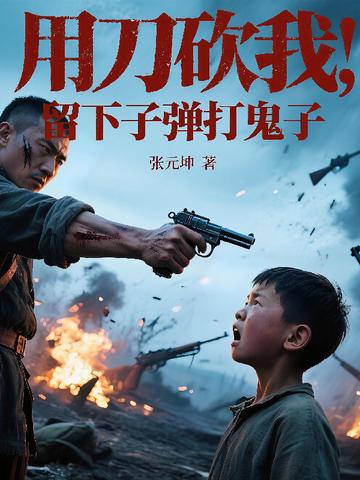
Chop Me with a Blade, Save the Bullets for the Japanese
用刀砍我,留下子弹打鬼子
- Status
- Completed
- Length
- 507k Words
- Genre
- Urban
- Subgenre
- War & Espionage
- Updated
- 1y ago
- Source
- Fanqie
Synopsis
101Chapters
2Reads
2.7kReads · all time
More by this author
 A Treasury of Animal Fables
 I'm with the Red Army. Requesting to Rejoin the Ranks
 Sailing Back to the Sea of Humanity
 The Legend of Zheng Qiao
 The Legend of Mulanpi
 The Bloodstained Siege of Niushan
 Brother Xiao Wu: The Avanti of Putian
 Jiang Chunlin: The Last Ironclad Censor
 Tales of Everyday Life
 Zen Shadow
 A Broken Blade Becomes a Spearhead: Wounded Red Army Soldiers Break Out of Desperate Peril
 The Mad Axe Splits the Heavens: The Wild History of Black Whirlwind
In booklists 2




Reader comments 4
Translated by Google Translate
The novel "Chop me with a knife and leave bullets to beat the Japanese" uses line drawing to outline the texture of the battlefield: the coldness of the cold knife reflecting the snow, the crisp sound of the bullet being loaded, and a few strokes of the pen make the smoke-filled scene vividly appear on the page. The book skillfully uses contrast to deepen the theme - the awe-inspiring attitude of the Little Red Army when facing the enemy, and the gentle exhortation to his comrades form a strong contrast, highlighting the versatility of the revolutionaries. The cry of "leave the bullets to fight the Japanese" uses minimalist lines to carry a huge force, and uses concrete choices to condense the righteousness of the family and the country, making the tragedy and sincerity more penetrating in the restrained narrative.
The author is good at using contrast techniques to create characters. The perseverance of Zhang Feihu, a 12-year-old Red Army soldier, and the roughness of the bandit Masandao create tension in the first encounter, while the cry of leaving bullets to kill the Japanese sublimates personal grudges into national justice through symbolic means. The author uses the vastness of the Loess Plateau as the background, contrasts the dim light of the cave dwellings with the smoke of the battlefield, and penetrates the arc of growth into the details - Zhang Feihu's sharp transformation from being unable to hold the sword to becoming a sharpshooter, and Ma Sandao's transformation from robbery to martyrdom, all were completed in the flames of war. This kind of narrative that sees the big from the small makes heroism more real.
Recreate history through scene montage and psychological portrayal. The novel uses montage-style scenes to connect the epic of the Anti-Japanese War: the fast-paced fighting in the Shentou Ridge ambush battle and the breath-holding sniper battle in the Huangtu Ridge battle alternately flash, and the description with a strong sense of camera makes the historical scenes vivid on the page. The precise portrayal of the character's psychology further demonstrates his skill: Zhang Feihu's stubbornness when hiding his wounds, Ma Sandao's tremor when facing the corpses of his compatriots, interweaving inner monologues with action details, allowing the characters to break through symbolism. The author weaves real battles with fictional characters, injecting human texture into the warp and weft of history, making the theme of "little people making great righteousness" more appealing.
Excellent works, I especially like to read and listen to them. Like 👍 👍 👍 👍 👍 👍 👍 👍 👍