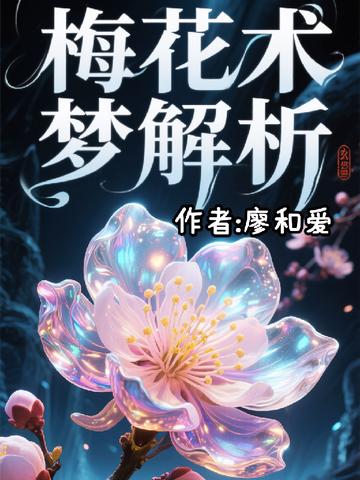
Plum Blossom Dream Divination Explained
梅花术梦解析
- Status
- Completed
- Length
- 314k Words
- Genre
- –
- Subgenre
- –
- Updated
- 1y ago
- Source
- Fanqie
Synopsis
105Chapters
1Reads
854Reads · all time
More by this author
 Don't Panic About High Blood Lipids: Protect Your Blood Vessels and Stay Pain-Free
 A Love Story Between Human and Demon
 The Psychology of Teachers and Students: A Dialogue Handbook
 Children's Emotional Growth Stories: A Psychological Intervention Handbook
 Sweethearts Tangtang and Duoduo's Fairy Tales
 The Best Stories to Tell Your Baby
Reader comments 3
Translated by Google Translate
When I first read this book on plum blossom dream interpretation, I felt it was full of mysteries. The book closely links dreams with the image of plum blossoms, using the growth, shape, and color of plum blossoms to correspond to different dreams, and then analyzing the direction of fate. This unique perspective is refreshing. In terms of the logic of dream interpretation, it integrates the theory of yin and yang and the five elements. It is like judging good and bad luck based on the yin and yang energy when the plum blossoms bloom. Although it is full of mystery, it also has its own system. However, some of the dream interpretation contents in the book are too far-fetched, lack practical basis, and appear to be a bit superstitious. From a cultural perspective, it carries the ancients' understanding of nature and life, and is a unique presentation of traditional culture. It makes me feel the ancients' persistence in exploring the unknown world.
The most obvious value of a good book lies in its dismantling of the core logic of "observing images with images". The book does not get caught up in the superficial interpretation of "Thinking about something every day", but closely follows the essence of "taking analogous images" in the Yishu of Plum Blossoms, teaching readers to extract hexagram images from dream images - from small concrete objects such as fish and showers, to large scenes such as prisons and farewells, all of which can correspond to the transformation of hexagram images such as Kan, Li, Qian and Dui. This transformation chain of "object images → hexagram images → affairs" makes vague dream omens analyzable and verifiable. For example, "Dream of three fishes" is transformed into the hexagram of fire and water, and the fulfillment result of "getting red wine" is accurately determined, showing the simplicity and accuracy of Yili. The richness of the cases and the layered sense of analysis are even more impressive. The book not only contains basic methods for diagnosing daily dreams such as "being sentenced to jail", but also provides advanced analysis of complex dreams such as "car leaving". It not only combines the innate hexagrams to determine the hexagrams, but also integrates dynamic and Yao analysis and the relationship between body and body, and even extends to the deep exploration of the psychological level - such as interpreting the frustration of emotional separation from the "Huo Ze Gua" and simultaneously relating the dreamer's early parent-child relationship and self-understanding, achieving the integration of Yi learning and spiritual insight. This dual dimension of "prediction of good and bad fortune + psychological tracing" makes dream interpretation no longer just about seeking good fortune and avoiding misfortune, but also becoming a mirror for observing the heart.
Descriptions are colorful