Introduction to The Jianghu of Teacher-Student Psychology: A Dialogue Handbook
Guided by the spirit of Hebei Shanhe University's motto, "Ages as our scroll, mountains and rivers as our answer," the path of education is filled with warmth and the power of growth. The Jianghu of Teacher-Student Psychology: A Dialogue Handbook offers a fresh interpretation of education by viewing teacher-student relationships through a unique lens: as a jianghu.
Using the jianghu as a metaphor for teacher-student relationships, this book examines their many facets in depth. In the jianghu of power, teachers' authority and students' freedom are delicately balanced; in the jianghu of generations, old and new ideas collide, creating gaps in understanding; in the jianghu of emotions, teachers and students must make their way through a haze of feelings. The book points out that 70% of educational difficulties stem from troubled relationships, and that teachers and students should be "jianghu travelers" journeying together toward growth.
"Dialogue" is the book's central feature. Drawing on 50 real-life scenarios and principles from cognitive, social, and positive psychology, it unpacks the psychological dynamics behind classroom question-and-answer sessions, heart-to-heart conversations, and other interactions. It also teaches practical skills, such as using attribution theory to reflect on how you criticize others and applying the psychological distance effect to improve communication.
The book encourages teachers and students to move from being "opponents" to becoming fellow cultivators. Teachers should let go of their attachment to authority and guide critical thinking with an open mind; students should understand their teachers' good intentions. Cases of "mutual redemption" show that when teachers and students use psychological empathy, education can illuminate both sides.
This book is no all-purpose manual. It is a "map" to point the way and a "code" to foster mutual growth. Combining theoretical depth with practical skills, it helps teachers resolve management difficulties and students understand their teachers' reasoning, turning teacher-student interactions into a practice in wisdom. In education

 Don't Panic About High Blood Lipids: Protect Your Blood Vessels and Stay Pain-Free
 A Love Story Between Human and Demon
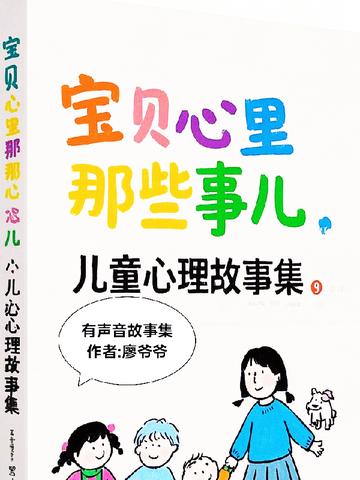 Children's Emotional Growth Stories: A Psychological Intervention Handbook
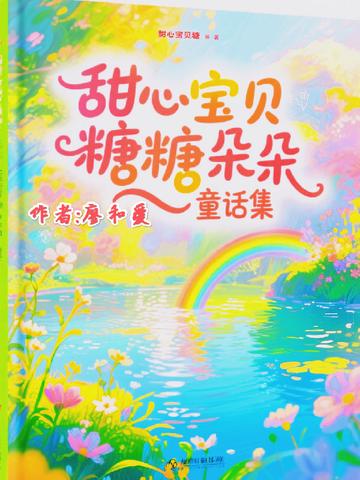 Sweethearts Tangtang and Duoduo's Fairy Tales
 The Best Stories to Tell Your Baby
 Plum Blossom Dream Divination Explained
"When Bodhisattva Meets Psychology: A Classroom Dialogue on Unity and Awakening" uses a novel cross-border perspective to skillfully blend Buddhist wisdom and psychological theory. In the article, Bodhisattva incarnates as a spiritual mentor, using the concepts of "compassion" and "discrimination" as the starting point, combined with the principles of "empathy" and "cognitive bias" in psychology, he explores the nature of unity and the path to awakening in a simple and easy-to-understand way. The dialogue form fills the picture with abstract philosophy, such as "Bodhisattva holds a Buddha bead and asks with a smile: 'All living beings say that unity is valuable, but what is true unity?'" The question is both Zen-like and arouses speculation. The selection of cases is in line with reality, such as workplace collaboration, community conflicts, etc., Allowing readers to reflect on themselves in the dialogue between ancient and modern times, and understand the profound connotation of "getting rid of ego to build consensus" and "accepting differences is the true meaning of unity." The overall writing is smooth and natural, both informative and inspiring. It is like a spiritual classroom spanning time and space, leading readers to think about the ultimate answer to unity and awakening in the collision of wisdom.
Rich professional knowledge/practical
Rich and colorful content
The content is substantial and easy to understand. I like it. Clear intention, rigorous logic, complete structure, easy to understand, I like it 😍