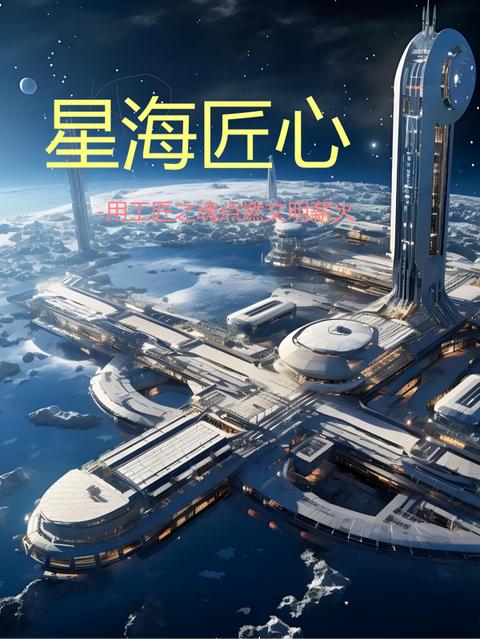
When the flying ribbons in Dunhuang’s murals transform into the fiery trails of rockets, Chen Feiyun, a paint apprentice abandoned by the capital, grips an ancestral porcelain shard and ventures alone into the Wenchang Launch Site amid the aerospace boom of 2016. From a cleaner who gazes up at the maiden flight of the Long March 7 to an “ordinary expert” who uses mineral formulas from the Mogao Caves to solve a problem with engine coatings, he is swept into the turmoil of commercial spaceflight and the maelstrom of international technology blockades.
On the eve of the Beidou network’s completion, the wisdom behind the Northern Song dynasty’s Water-Powered Armillary Sphere helps him crack the predicament of spaceborne atomic clocks. At a critical point in the construction of a space station, Tang dynasty gilding secrets trace “Chinese flying apsara patterns” across the lunar surface. When a near-Earth asteroid threatens humanity, the cloisonné technique of bending wire unexpectedly becomes a probe’s final armor. From the deserts of Jiuquan to deep-space orbit, from a crucial frequency band donated by smugglers to an Eastern totem engraved jointly at a Sino-Russian lunar station, a group of ordinary people kindle the flame of civilization with the spirit of craftsmanship. What rises with the rockets is not only liquid oxygen and liquid hydrogen, but humanity’s age-old gaze toward the heavens, stretching from the Zhoubi Suanjing to Tianwen-1 across a thousand years.