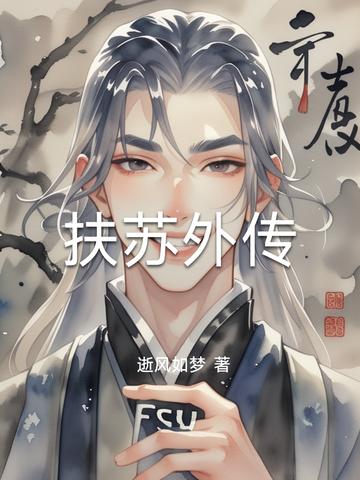
In the first year of the Second Qin Emperor's reign, a banner bearing a wolf and a deer, personally painted by Prince Fusu, was raised in Jiuyuan. The wolf's head symbolized the cavalry of the northern tribes, while the deer pattern alluded to the Chu people's totem. Together, they embodied his vision of governance: “one realm for the Hu and Han, Qin and Chu joined as one.” Set against the chaos of the late Qin dynasty, this novel unfolds an epic tale of clashing civilizations and political intrigue.
On the walls of Kuaiji, Xiang Yu killed Yin Tong and raised the Chu banner. But Xiang Liang used a bloodstained Qin-Chu alliance to disguise “rebelling against Qin” as “purging the emperor's court,” concealing his scheme to make Fusu ruler and the Xiang clan his ministers. At Bolangsha, Zhang Liang's iron hammer smashed through the carriage curtain, allowing Fusu to glimpse the old aristocracy's resistance to the new order in fragments of the Songs of Chu and Korean crossbows. In the streets of Huaiyin, Han Xin endured the humiliation of crawling between someone's legs. Zhongli Mo saw through his identity as a descendant of Lord Changping, setting him on a path to rise again by “borrowing Qin's system and forging Chu's spirit.”
As Chu songs and Qin melodies rang out together, and the Songs of Chu were recited alongside Qin laws, Qin and Chu civilization moved from conflict toward integration. Qin lanterns hung in Chu palaces, Chu tea was prepared at Qin postal stations, and armor combined Chu leather with Qin iron. The seal of “joint Chu-Qin rule” replaced the seal of the Chu king. Yet a unique copy of The Book of Lord Shang in Mount Li's mausoleum, fragments of the Chu king's seal secretly kept by Xiang Liang, and Chen Sheng's household registration data on Chu subjects all foreshadow the truth behind Hu Hai's “double-substitute” plan, Consort Zheng's Chu connections, and the secret edict to burn the books.
With “Fusu's scheme is to forge a people's spirit” as its central thread, the novel weaves together Xiang Yu's boldness, Zhang Liang's transformation, Han Xin's patience, and Chen Sheng's awakening, venturing deep into the realm where institutions and civilizations coexist. As the wolf-and-deer banner stands beside the Chu bear banner on the walls of Kuaiji, a new civilization beyond the Qin-Chu divide is taking shape. This is not a change of dynasties, but a parable of Chinese civilization reborn through conflict.