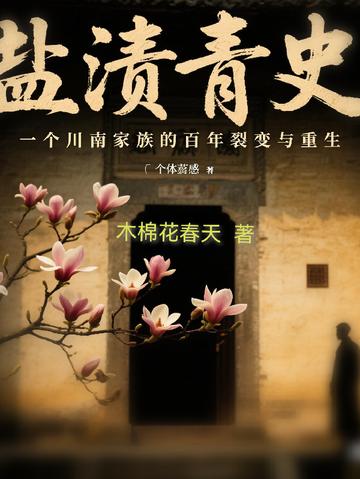
**Historical Setting**: 1933–2023, a century-spanning family saga in southern Sichuan, spanning the turmoil of the Republican era, the flames of the War of Resistance, land reform after the founding of the People’s Republic, reform and opening up, and the revival of the new century.
**Central Storyline**: The changing fortunes of four generations of the Wu family, a salt merchant dynasty from Zigong, Sichuan. Four heirlooms, **salt, cloth, horse, and lock**, trace a tale intertwining folk secrets, business rivalries and schemes, love of family and country, and the transformations of the times.
### **Volume One: Torn Silk of Shu Embroidery (1933–1949)**
**Keywords**: **Salt Bandit Rebellion · Family Collapse · Blood Curse**
In 1933, wealthy merchant **Wu Dabao** owns a silk and cloth shop and a prized blood-sweating horse. But after his eldest daughter, **Jinsuo**, is kidnapped by bandits, the family falls into decline. Jinsuo dies tragically, Wu Dabao becomes addicted to gambling, and he eventually loses everything and dies in despair. His young son **Wu Benchang** and daughter **Wu Benxian** are left orphaned, enduring the harshness of the world.
**Hidden Thread**: The truth behind Jinsuo’s death conceals a shocking secret about child labor in the Zigong salt fields and infiltration by Japanese spies. The embroidery she made, "A Hundred Sons and a Thousand Grandsons", is actually a map of secret salt-transport routes, later used by the underground Communist Party.
### **Volume Two: The Commoner’s Years (1950–1978)**
**Keywords**: **Turbulence of Land Reform · A Red Marriage · Salt Workers Awaken**
After liberation, **Wu Benchang** is groomed as a land reform cadre and put in charge of distributing supplies. He marries **Yu Shuhua**, a revolutionary’s widow. Together, they protect their family through turbulent times