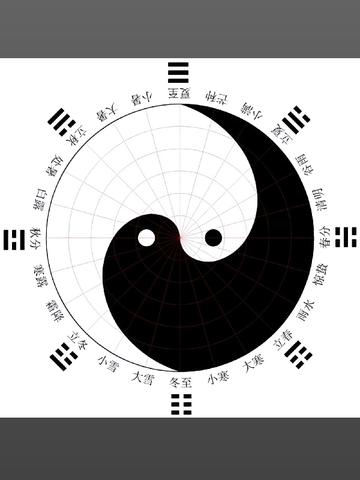
Feng shui is a traditional Chinese philosophy of the environment with a long history and far-reaching influence. Based on observations of nature and the universe, it incorporates concepts such as yin and yang, the Five Elements, and the Eight Trigrams. Its central aim is to achieve harmony between people and their natural surroundings, bringing good fortune and avoiding misfortune.
Feng shui is mainly divided into the Form School and the Compass School. The Form School focuses on observing the landscape, such as the course of mountain ranges (known as "dragons"), suitable places to live (called "穴"), surrounding hills (called "sand"), and waterways (called "water"). It judges good and bad fortune based on the forms and arrangement of these features, and values "mountains encircling a place and water embracing it" and "sheltering from the wind and gathering vital energy." The Compass School uses numerology and the principles of the Book of Changes, including the Heavenly Stems and Earthly Branches, the Three Cycles and Nine Periods, and the Nine Palaces Flying Stars. It considers how changes in time and space affect the flow of energy to analyze the feng shui of homes and buildings.
In practice, feng shui touches every aspect of life. When building homes, people in ancient times chose their orientation and planned their layout according to feng shui. For example, facing south with one's back to the north provides good sunlight and shelter from the wind. Today, although some aspects of feng shui lack scientific basis, it reflects the importance ancient people placed on their living environment. Its ideas about respecting nature and planning spaces still offer some value for modern architecture and landscape design.