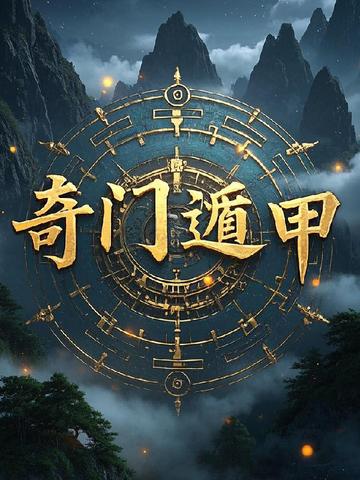
Qimen Dunjia is an ancient Chinese system of divination, hailed as the "learning of emperors." It brings together knowledge of the I Ching, astronomy, calendrical systems, and geography. Using a distinctive system of symbols, it constructs models for prediction. Its core elements are the Three Wonders and Six Instruments, the Eight Gates, the Nine Stars, and the Eight Spirits. The Three Wonders are Yi, Bing, and Ding, representing special energies. The Six Instruments are Wu, Ji, Geng, Xin, Ren, and Gui, which combine with the heavenly stems and earthly branches to form coordinates of time and space. The Eight Gates correspond to different states: the Gate of Rest represents peace, while the Gate of Life represents wealth. Each of the Nine Stars has its own qualities; the Canopy Star represents adventure. The Eight Spirits assist with judgment, and the Chief Talisman symbolizes authority.
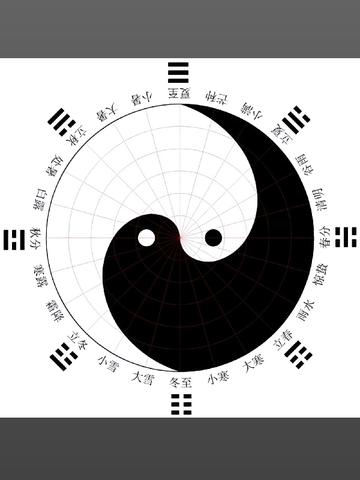
Its charts are set up using either the Yang Dun or Yin Dun method. Yang Dun is used from the winter solstice to Grain in Ear, and Yin Dun from the summer solstice to Major Snow. The elements are arranged according to specific rules to model the laws of the universe, helping predict fortune and guide decisions. Though it is shrouded in mystery and some aspects are difficult to explain scientifically, it is an important part of traditional culture that embodies the wisdom of the ancients. It has had a far-reaching influence in fields such as military affairs and folk customs, and invites exploration of its mysteries.