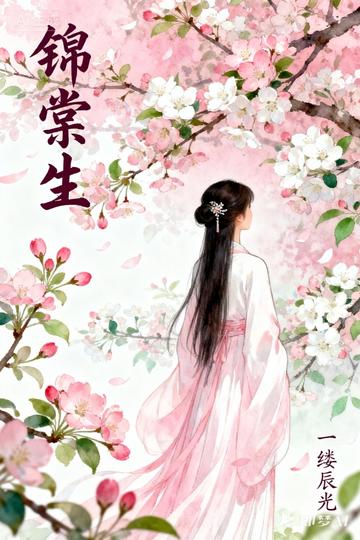
During the Yongxi era, the Shen family was the most illustrious century-old clan in the capital. Shen Jintuan, the legitimate daughter of the Shen household in the capital, was sixteen, a sweet, giggling little dumpling. Beneath her innocent, adorable appearance lay a mind far more meticulous than anyone her age. When a conspiracy in the struggle for imperial power struck without warning, the family’s century-old estate fell in a single night. Amid the clamor of the drums announcing the confiscation, Shen Jintuan pushed down her panic. No one knew that the marked begonia flower at her temple was one her grandmother had taught her to choose. “A begonia’s calyx bears a mark, just as people carry memories in their hearts. One day, when you see the same mark, you’ll know they’re one of us.” She had been too young to understand. Only now did she grasp that the flowers hidden in marks on petals, patterns on boxes, and ornaments on hairpins were like the roots of a begonia: buried out of sight, yet able to keep the flower blooming for years. Clutching the Book of Songs, which held the lifeline of her family, the little dumpling who had always been protected was forced to shoulder the burden of protecting them. From “hiding her talents to protect herself” to “taking control and turning the tables.”
People in later generations often said that the begonias in the Shen estate withered with unusual haste that year. One rainstorm swept all the blossoms from the branches. Only a few remembered that after the rain stopped, someone found a begonia trapped beneath a green brick by the wall of the Shen estate. The mark on its calyx was still there. Though its petals were wet, they had not rotted, as if they were waiting for something. That flower concealed all the secrets of that late spring: the schemes behind the red gates, the truth hidden beneath the surging currents, and all the paths to survival a young woman had quietly and painstakingly laid for her tottering family.