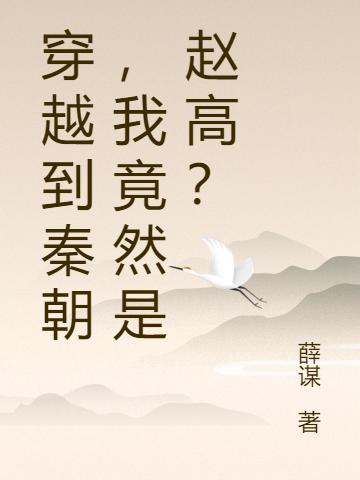
When I fell from the flashbulbs of a modern courtroom into the blood-soaked carriage of Qin Shi Huang’s eastern tour,
my left hand was clutching a forged decree ordering Fusu’s death, while my right still remembered the warmth of the keyboard from reporting on a mining disaster.
They called me “Zhao Gao”:
the treacherous courtier from the history books who called a deer a horse. Now I had to use my modern knowledge to extend the life of Great Qin.
Every time I improved a Qin law, the counting rods cut a new line into my palm;
every time I saved a life, an imperial edict erased my mother’s face from my memory.
Hu Hai was playing a game dissecting locusts. He called it “hands-on biology”;
Zhang Han’s bronze sword glimmered blue in the moonlight like a modern rifle;
deep in the mausoleum at Mount Li, Mohist mechanisms turned, murmuring binary secrets that belonged to no age but this one.
I could no longer tell what was corroding history:
the flames of burning books and burying scholars,
or the “vaccines of civilization” brought by the seven of us transmigrators.
When the stars began reflecting the outlines of twenty-first-century skyscrapers,
I finally understood the First Emperor’s last oral decree:
“Great Qin is history’s poison, and you...”
The inscription on the meteorite suddenly broke off, much like the bribery evidence I had torn up in court all those years ago.
Now, outside the hall, a herd of deer was crying out with the shrieks of quantum entanglement.