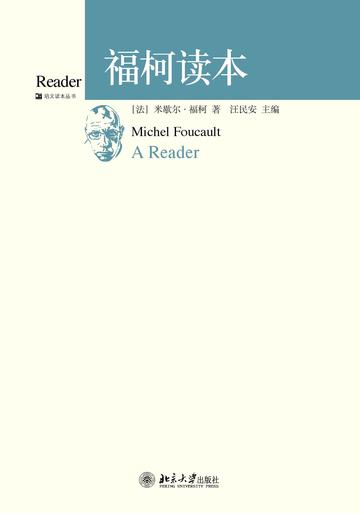
Foucault (1926-1984) is one of the most important thinkers of the 20th century. His stature in the contemporary academy is unrivaled. Foucault tried to show people how the modern subject gradually acquired its current image in the historical process. The genealogical exploration of the modern subject allows the historical and cultural path of the West to unfold in unfamiliar yet surprising ways. His works have had a profound impact on philosophy, sociology, history, literature, political science, law and art, and have changed the established face of these disciplines. This reader selects 24 representative essays by Foucault from different periods (most of which are translated into Chinese for the first time), and we can clearly see the trajectory of Foucault's thoughts.
Reader comments
This book is very interesting! Foucault's perspective on historical research is very unique. He chose topics such as madness, humanities, and punishment that we don't pay much attention to, which allowed me to see a different history. I especially like his analysis of power and subjectivity, which I find very enlightening. Moreover, some of the ideas in the book are quite novel. For example, he said that the subject is shaped by various power technologies and knowledge, which made me think more deeply about my own existence. All in all, this is an eye-opening book, and I recommend you read it too!



This book is very interesting! Foucault's perspective on historical research is very unique. He chose topics such as madness, humanities, and punishment that we don't pay much attention to, which allowed me to see a different history. I especially like his analysis of power and subjectivity, which I find very enlightening. Moreover, some of the ideas in the book are quite novel. For example, he said that the subject is shaped by various power technologies and knowledge, which made me think more deeply about my own existence. All in all, this is an eye-opening book, and I recommend you read it too!