Demon monsters, colossal dragons, elemental lifeforms, animated plants, evil spirits and nightmares, totemic gods...
Song Zhan opens his eyes in the vast world of beast tamers and gains a Beast-Taming Trait Panel. Each day, he can draw traits to replace his pets' existing ones, or spend experience points to upgrade them.
With the same number of trait slots, why spend big on powerful rare beasts when weak pets with more negative traits offer so much better value?
[Tyrant of Khorne] [King of Ruin] [Black Sun Beyond the Firmament]...
The Shadow Crow, so weak it can only serve as a night scout, becomes in Song Zhan's hands a three-legged Black Sun, an ominous harbinger of darkness. Its countless avatars blot out the sky with a dark shroud, sweeping through like a hurricane and leveling mountain ranges.
The naturally deformed and frail Phosphor Lizard becomes a king among dragonkind, wielding the power of ruin. One breath of ruin leaves a land stretching thousands of miles devastated for a thousand years.
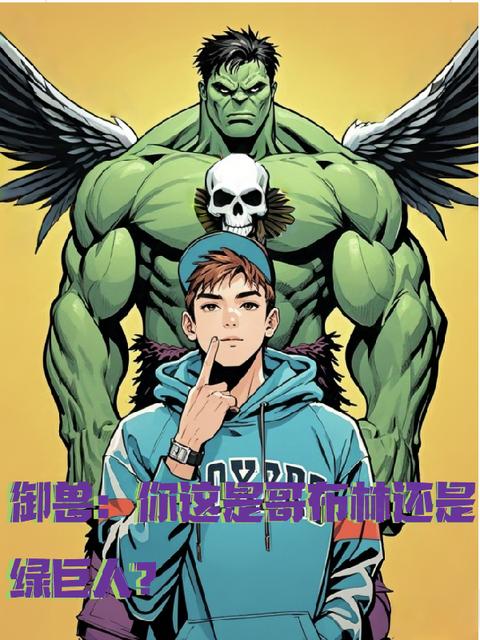
The Goblin, famed for its weakness, transforms in his hands into a god of brutality whose strength grows without limit with its rage, smashing continental plates with its bare hands and tearing ancient gods apart.
When divine beasts, once worshipped by humans as totems in the distant, primitive past, try to join forces to turn back thousands of years of human civilization, a lowly goblin among demon monsters chases them down and beats them black and blue. They can only cry out in disbelief and ask if this is normal.
Song Zhan: "If you're weak, train harder."






If pets can be changed so easily, why should someone like you, with no power or influence, be able to protect a strong individual?
How much does a positive review actually cost? Let's pool our money and grab some good pets! It's so tempting, one review is enough to deter anyone!
This worldview suggests that while the nation as a whole is powerful, local strongmen can do whatever they want. At most, they can only manage a small patch of cloth; schools and beast-taming competitions shouldn't be able to develop. After all, in this world, if a pet can be stolen and you're flashy, there will always be someone stronger than you.
The plot feels too contrived, as if all the world's suffering has found its way to the protagonist. First, his pet is forcibly taken away by a lowly female henchman; then she challenges him to a battle; his mother is scammed by a pet shop and buys a worthless pet; his father's death might be suspicious—he could have been framed by his companions; and even in a match, his opponent has his pet on their radar. It's unbearable to watch; the protagonist is far too good at enduring hardship.
The plot is overly archaic, lacking any logical underlying order. The first plot point, where pets are swapped out after being summoned, is a ridiculously obvious way to stir up hatred and advance the story, written in a very simplistic way with no satisfying moments.
The second chapter's beast swapping is particularly dangerous.
The creativity is commendable, but the various descriptions in the text are really hard to follow. The students in the text stared wide-eyed, and the homeroom teacher also stared wide-eyed in surprise. I think at this moment, the author must have been staring wide-eyed and deep in thought. The readers stared wide-eyed to appreciate the masterpiece, and the audiobook listeners were really stunned by the endless descriptions of various things in the text.
Those who haven't seen poop should take a look.
He kept poisoning her, and his own mother wouldn't tell him about their enemy, waiting for him to die unknowingly at their hands. The premise is also flawed; if someone can steal another's beast, what future is there for a commoner genius?
The plot is terrible, but the "golden finger" (a powerful, overpowered ability) is great. It's barely watchable.