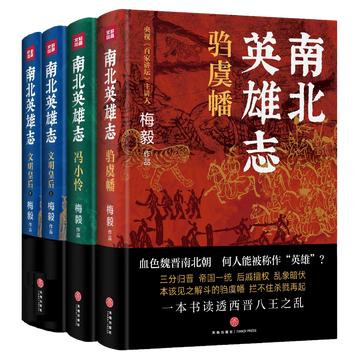
The Heroes of the North and South is a series of historical novels about outstanding figures of the Wei, Jin, and Northern and Southern Dynasties periods.
The Banner of the Zouyu centers on the War of the Eight Princes in the Western Jin dynasty (290–307). The author follows several power blocs that sometimes cooperated and sometimes fought one another: the imperial consort and maternal relatives group, including Empress Yang of Emperor Wu, Empress Jia of Emperor Hui, and Liu Yuan’s empress, Yang Xianrong; the group of celebrated scholars, including Shi Chong, Pan Yue, the brothers Lu Ji and Lu Yun, Liu Kun, Zhang Hua, and Pei Wei; and the imperial clan, made up of the various Prince Sima rulers. Their open and secret clashes, intrigue, and mutual deception are interwoven with the story of Liu Yuan, a Xiongnu who would become the founding emperor of Han Zhao, biding his time in the shadows. Together, these threads bring the historical setting and details of the Western Jin dynasty vividly to life.
Feng Xiaolian depicts the lives of emperors, consorts, generals, monks, commoners, and other people in the Northern Qi dynasty (550–577). Using a montage technique, the author tells the story in the first person. Each chapter is a compelling story in its own right, like a memoir, drawing readers deeply into the narrative. Yet the novel as a whole resembles a complete picture assembled from countless fragments, lifting the veil on a mysterious, controversial, and blood-soaked era. This gives the work even greater splendor and impact. Its characters and plot details are richly drawn, and its meticulous research never feels dull. The novel reflects the author’s deep knowledge of history, vividly portraying the Northern Qi era as dazzling yet bloodstained and dark, with an aesthetic all its own.
The Civilized Empress tells the extraordinary life story of the first woman in Chinese history to become a great reformer: Empress Wenming of the Northern Wei. The story begins in the final years of Emperor Taiwu of Northern Wei and ends with the enthronement of Emperor Xiaowen (440–471). Amid the upheavals of the Northern Wei era, Empress Feng supported Emperor Wencheng, guided Emperor Xianwen, enthroned Emperor Xiaowen, subdued the Rouran in the north, repelled the Song in the south, and transformed customs. During her 49-year life, she held supreme power for more than 20 years. She was the true architect behind the Taihe Reforms, whose success made Northern Wei wealthy and powerful and enabled its people to live in peace and prosperity. Alongside Empress Feng, the book brings to life many other historical heroes. It showcases the talent and wisdom of outstanding figures of the Northern and Southern Dynasties while also portraying individuals struggling with the twists and turns of fate in their times.
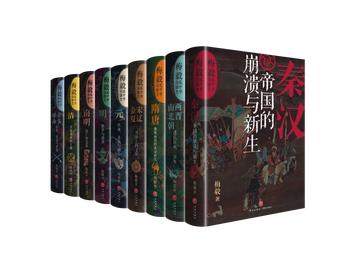 Mei Yi Talks Chinese History (Complete 9-Volume Set, Revised Collector’s Edition)
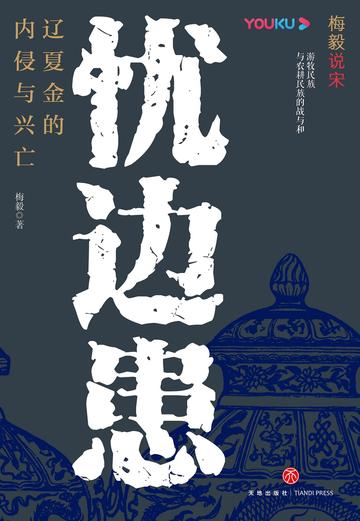 Worrying About Border Threats: The Invasions, Rise, and Fall of the Liao, Xia, and Jin
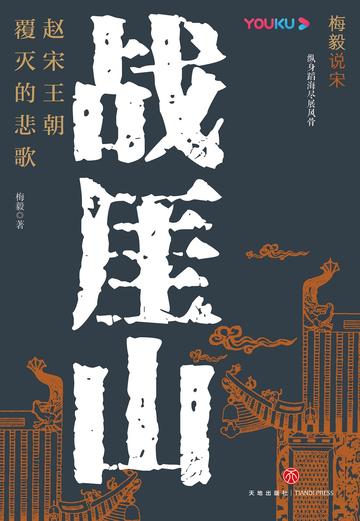 The Battle of Yashan: The Tragic Song of the Zhao Song Dynasty's Fall
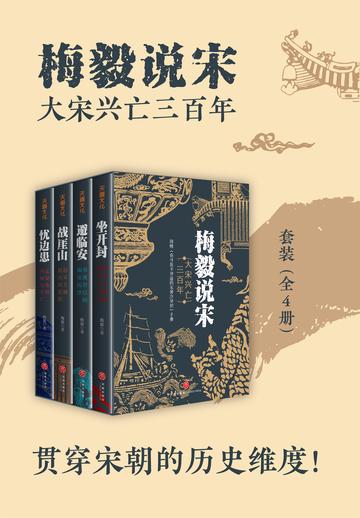 Mei Yi on the Song Dynasty: Three Hundred Years of the Empire’s Rise and Fall (Complete Four-Volume Set)
The Northern and Southern Dynasties were complicated. If Gao Cheng had not died, he might have unified the world as the Northern Qi Dynasty. Unfortunately, Gao Huan was a hero and most of his descendants suffered from schizophrenia.
Teacher Mei's writing is so good, and she captures the ghostly feeling.
The narrative method is unique and refreshing.
This book is very rich in historical details. It was like watching a shocking movie. It allowed me to understand the mysterious and charming era of the Northern and Southern Dynasties. The characters in the book are vivid, and I seem to be able to see them active on the stage of history. The author's writing is beautiful and the writing style is unique. It is very attractive to read, just like a friend around me telling me a story. I especially like the volume "Feng Xiaolian". The characters and plots resonate with me very much, as if I see the shadow of the people around me. This book gave me a deeper understanding of history and made me appreciate my current life more.